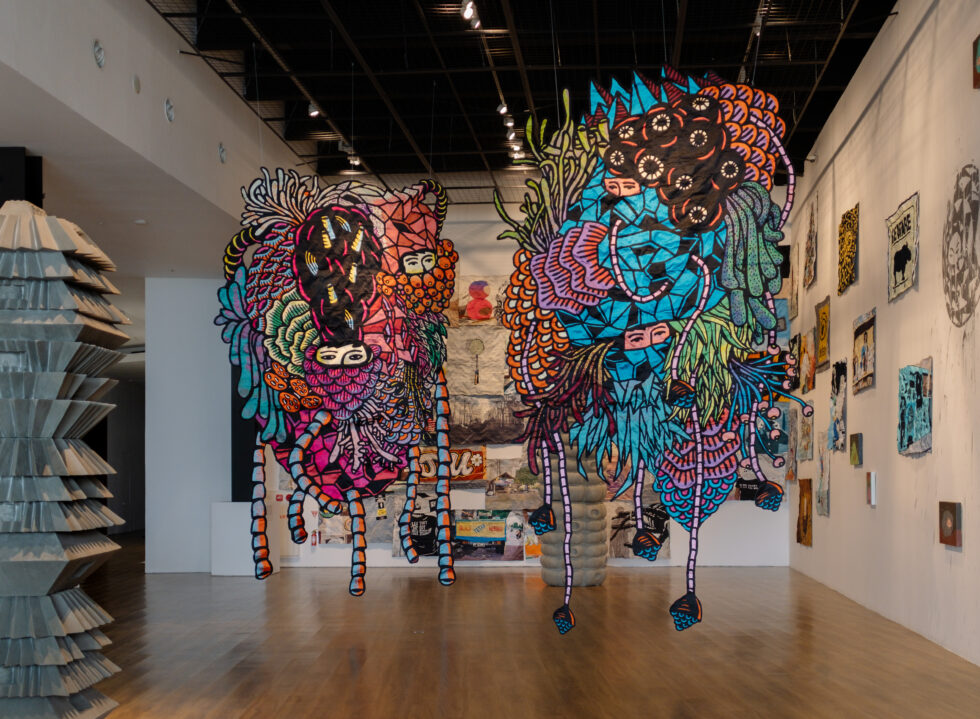
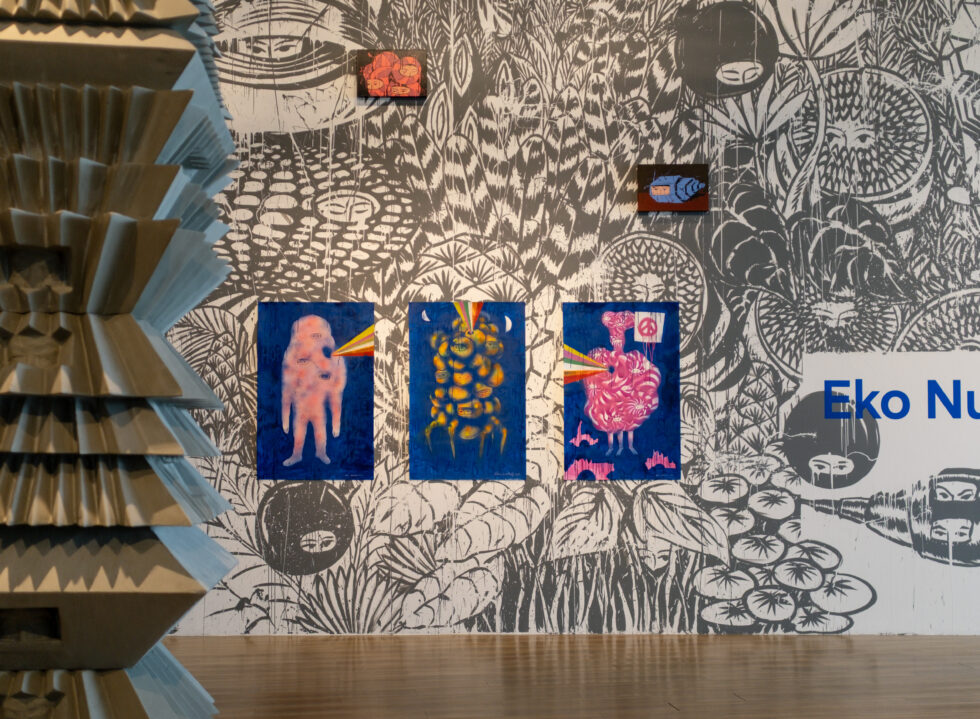
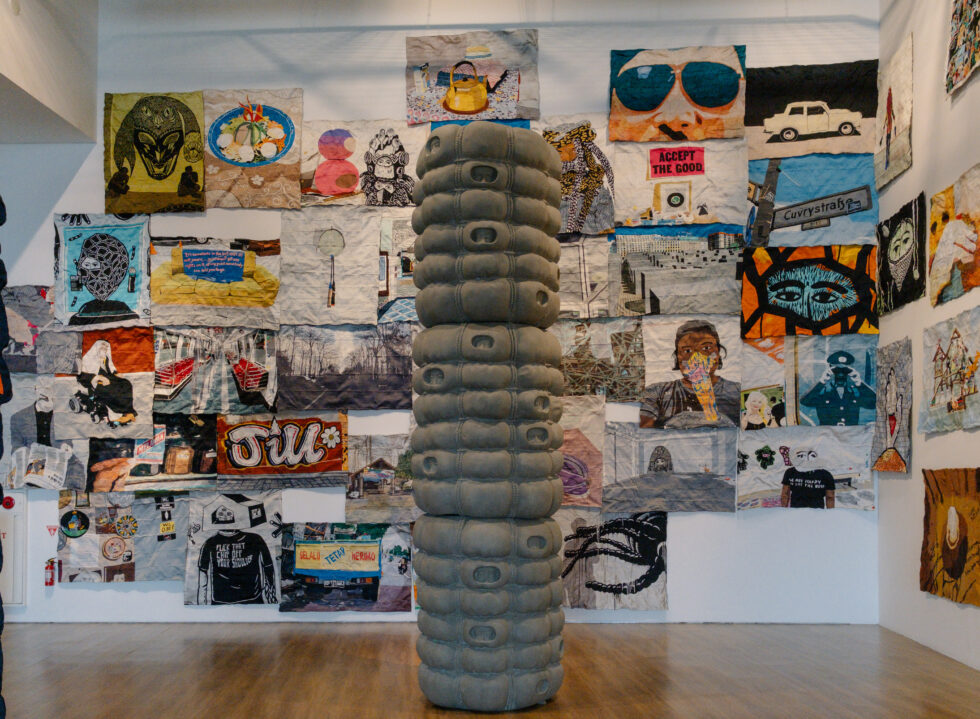
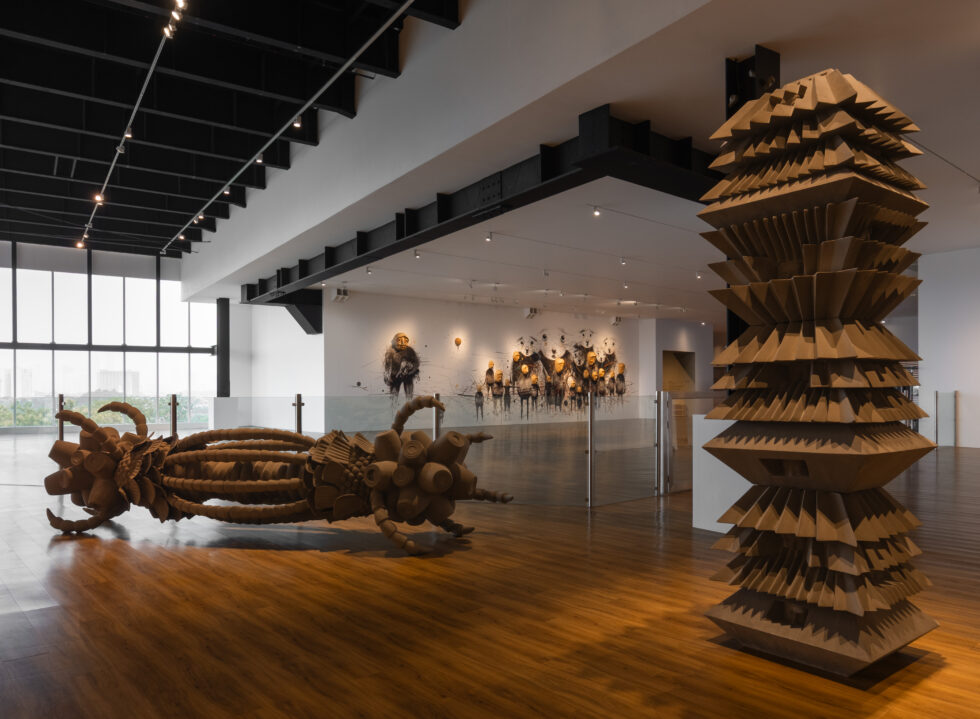
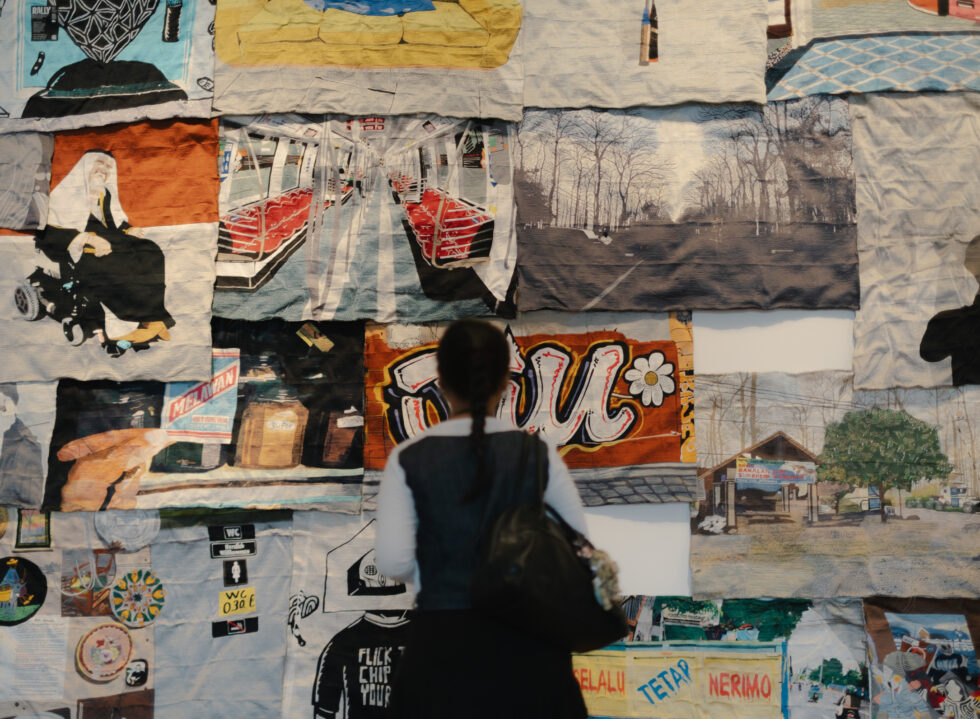
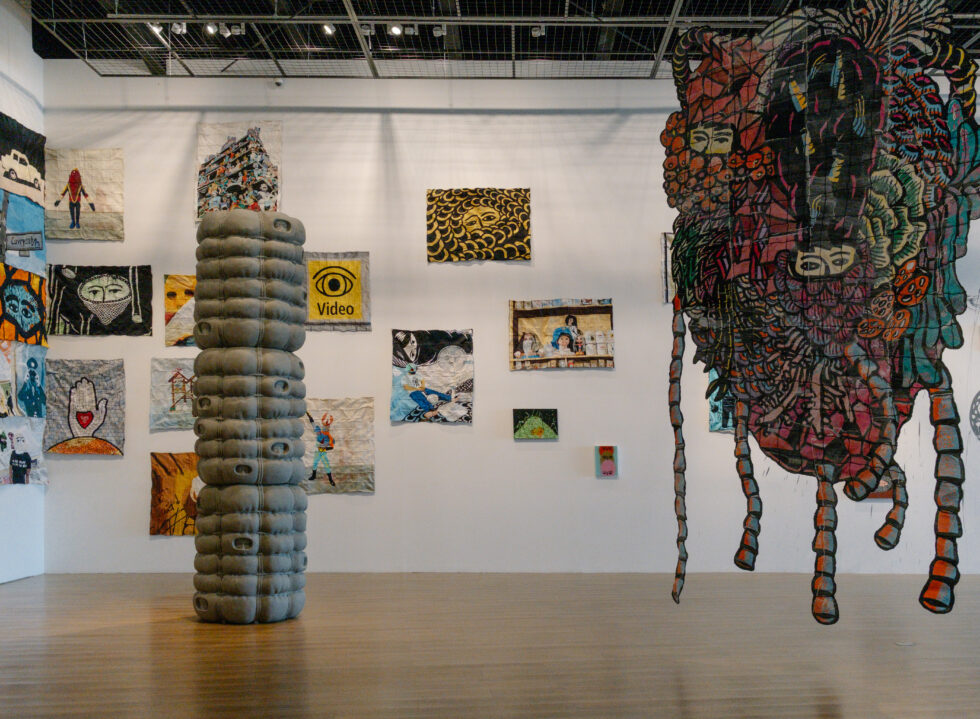
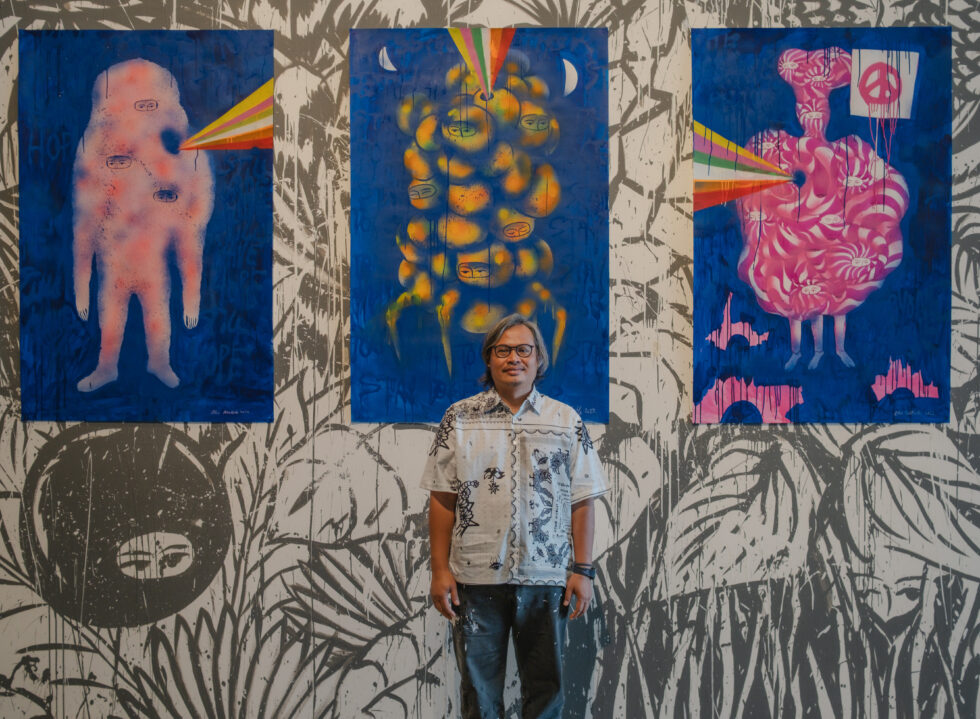
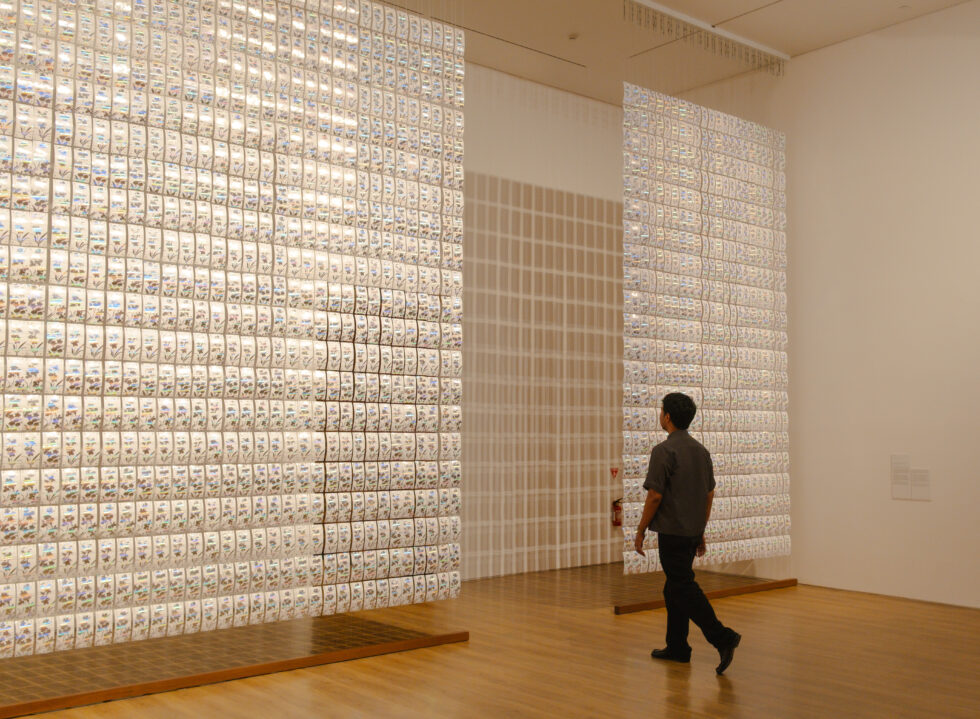
Beginning this November, Museum MACAN presents three simultaneous solo exhibitions marking over two decades of creative endeavour by leading Indonesian contemporary artists: Scenic Disorder by Eko Nugroho, Pulse for Pulse by Iwan Effendi, and Ketok Magic by Tromarama. Spanning distinct practices from puppets, hand embroidery, sculptures, to algorithmic installations, the exhibitions examine how humans might reclaim agency in an increasingly automated age, with tactile craft emerging as a common thread.
Critical commentary on power, control, and free will
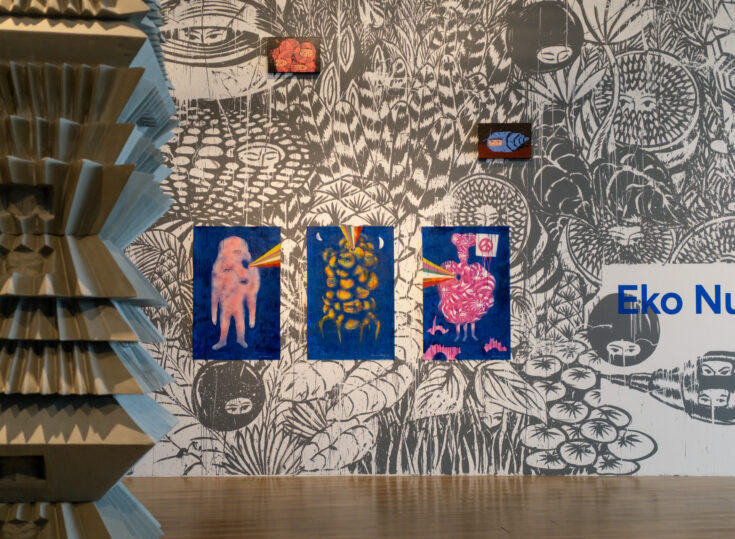
In Scenic Disorder, Eko Nugroho turns the museum into a visual diary of recurring social anxieties, pushing back against unfulfilled promises by the government. “Disorder here is about the anomaly when something is presented with good intentions, yet in execution, turns out completely different,” explained Eko, hinting at Indonesia’s political landscape. His three-part sculpture series Abandoned Monument (2026), created as a critique of large-scale urban development, is coated in a subdued grey that evokes forest-fire smoke and raw concrete. Peering out from within the concrete are small figures representing the invisible workers who form the backbone of grand construction projects yet rarely share in the prosperity they are promised.
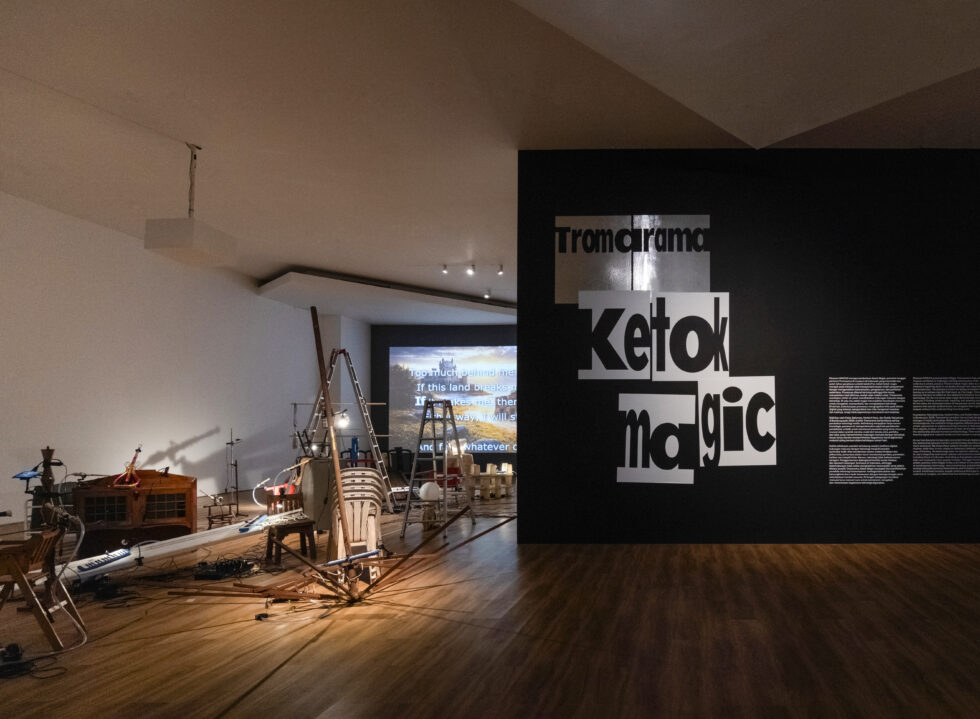
That tension between visible structures and unseen control also drives Bandung-based trio Tromarama (Febie Babyrose, Herbert Hans, and Ruddy Hatumena) in Ketok Magic. Named after Indonesia’s roadside auto-body shops that hammer out dented cars behind closed doors, the exhibition examines how digital technologies operate out of sight while competing for attention. “Because of the internet, the platform-based economy emerged where attention holds value and data is ultimately treated as valuable as gold,” explained Herbert Hans.
In Upon a Machine (2026), they use AI to turn Paman Gober (Scrooge McDuck) comic panels into anti-capitalist lyrics. They wire fans, wind chimes, and musical instruments such as melodicas and soprano recorders (suling) onto battered secondhand furniture and transform the lyrics into binary code that activates the instruments. By embedding code inside domestic objects, they show how algorithms and data extraction have seeped into private spaces and quietly shaped our routines. “Now that AI is truly dominant in our daily lives, what is our agency as humans? Do we still have free will?” asked Herbert.
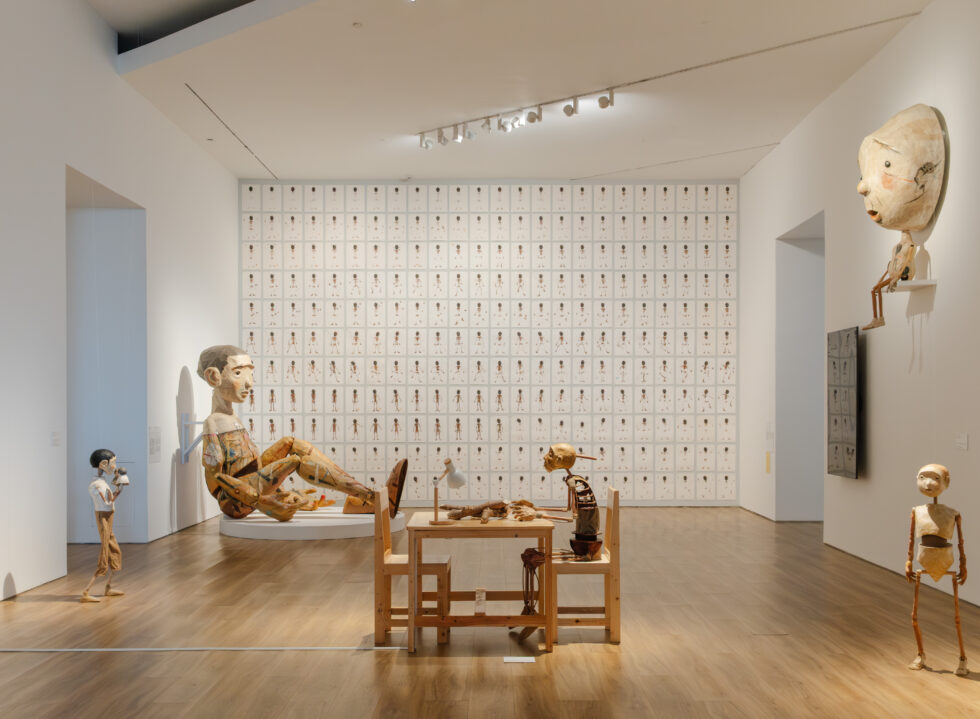
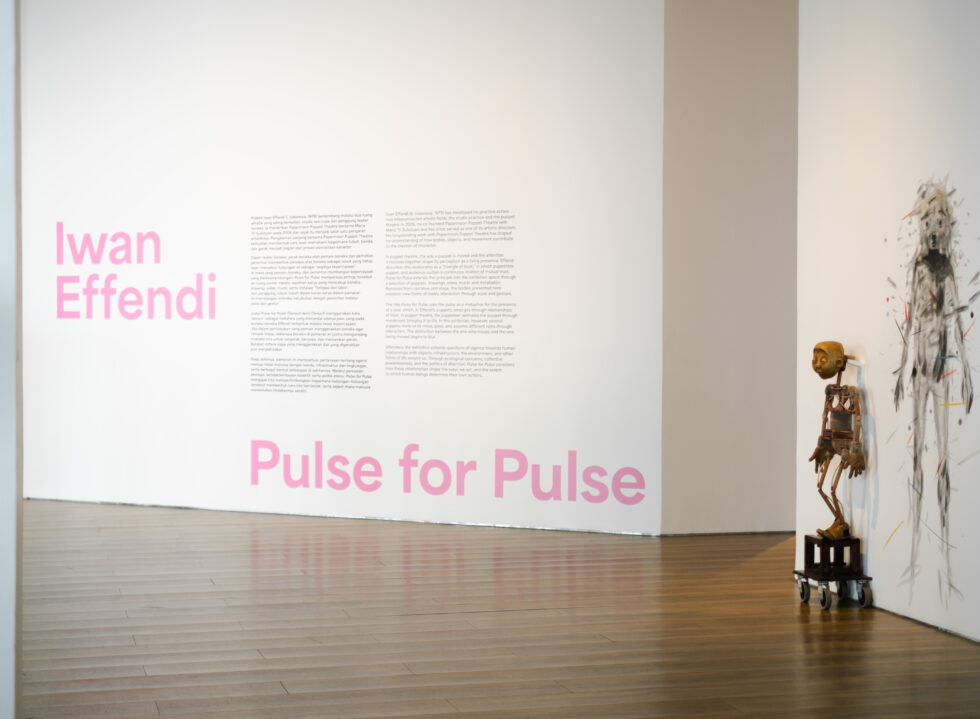
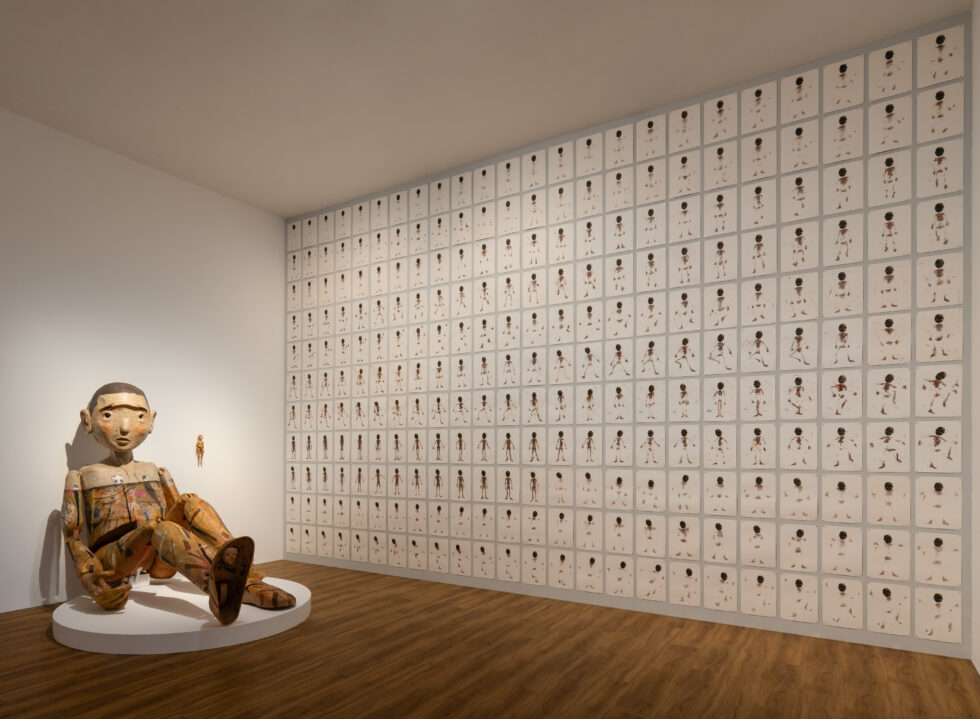
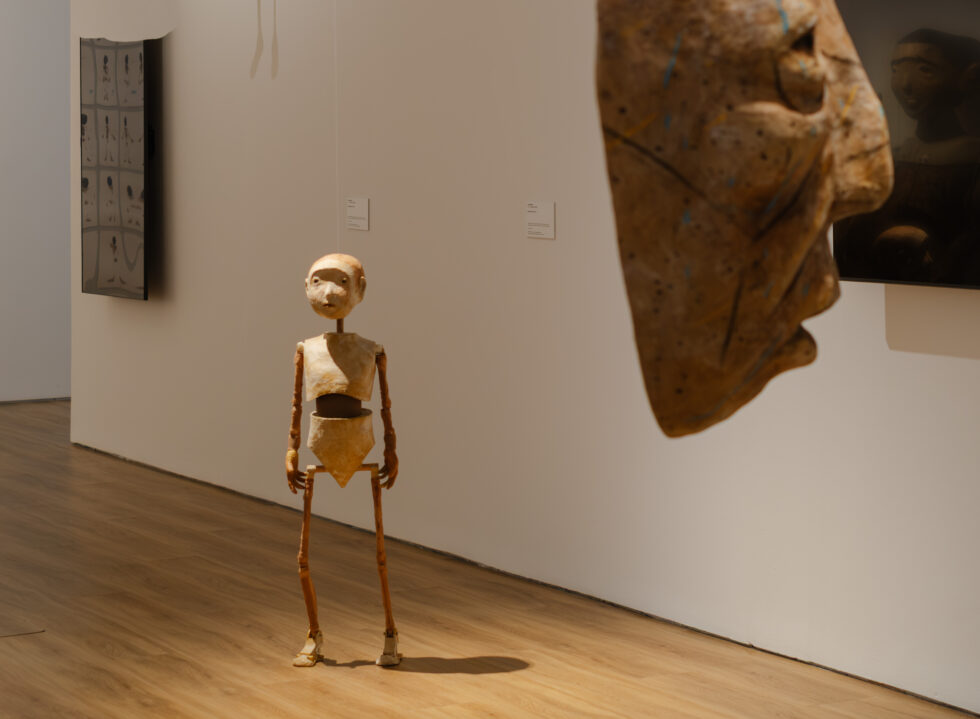
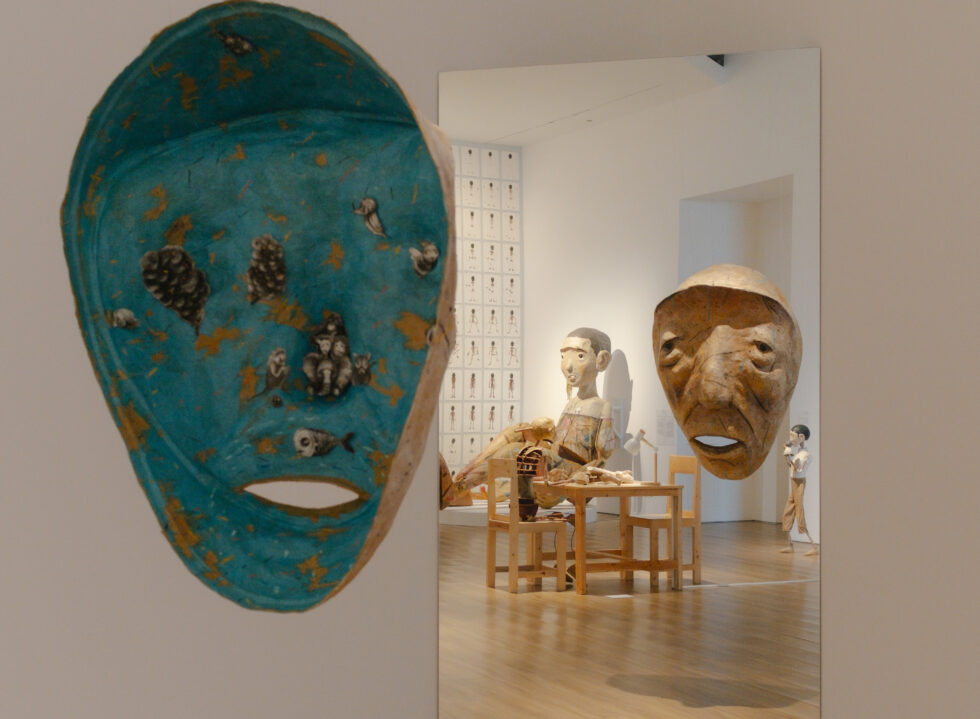
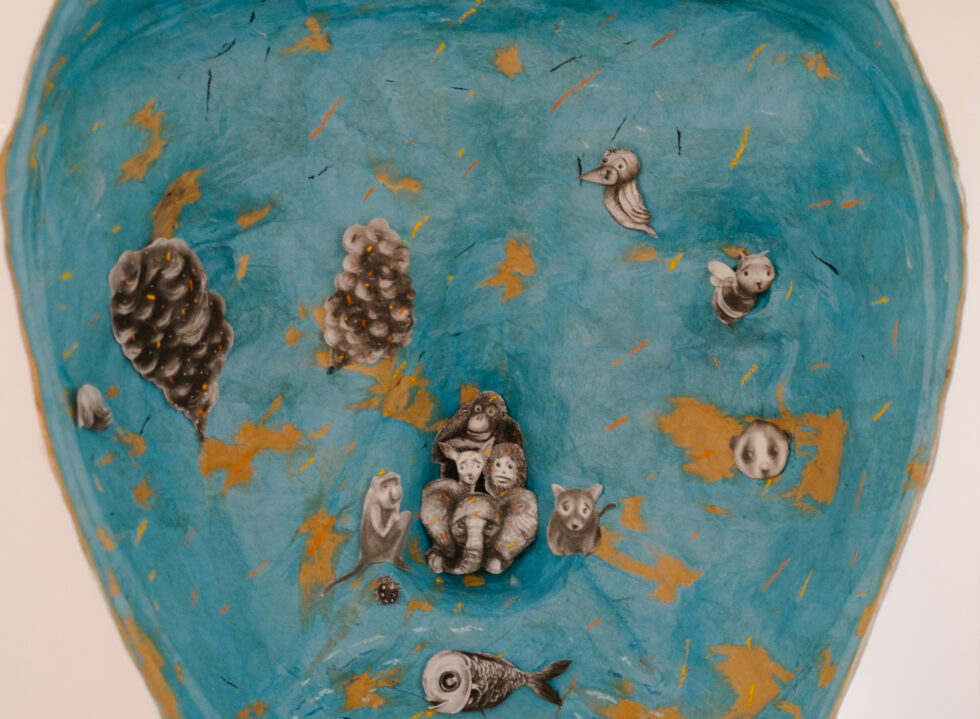
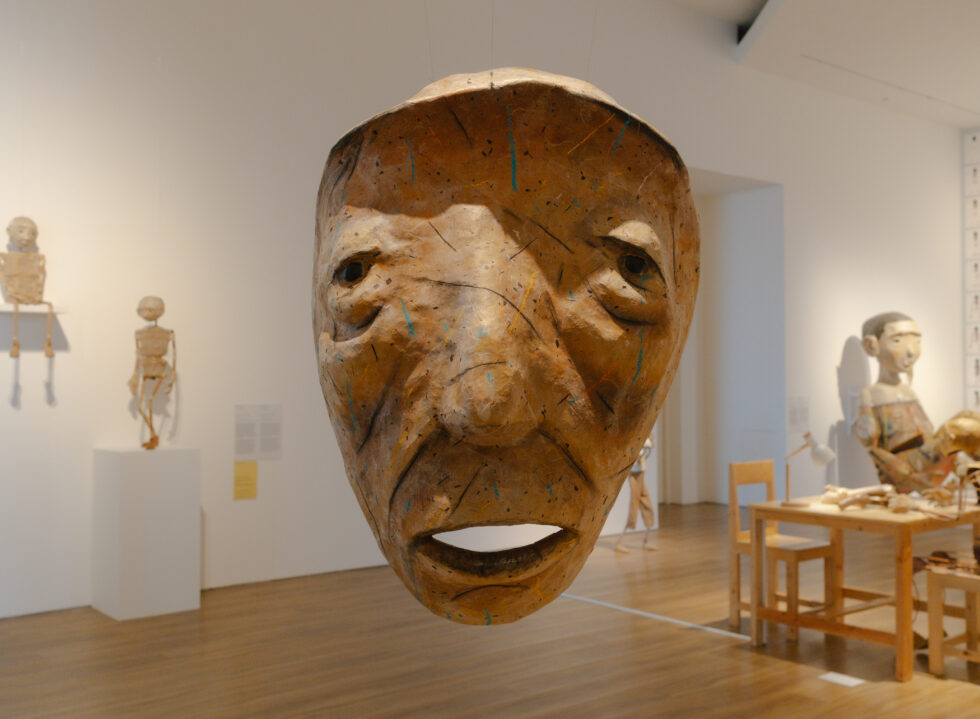
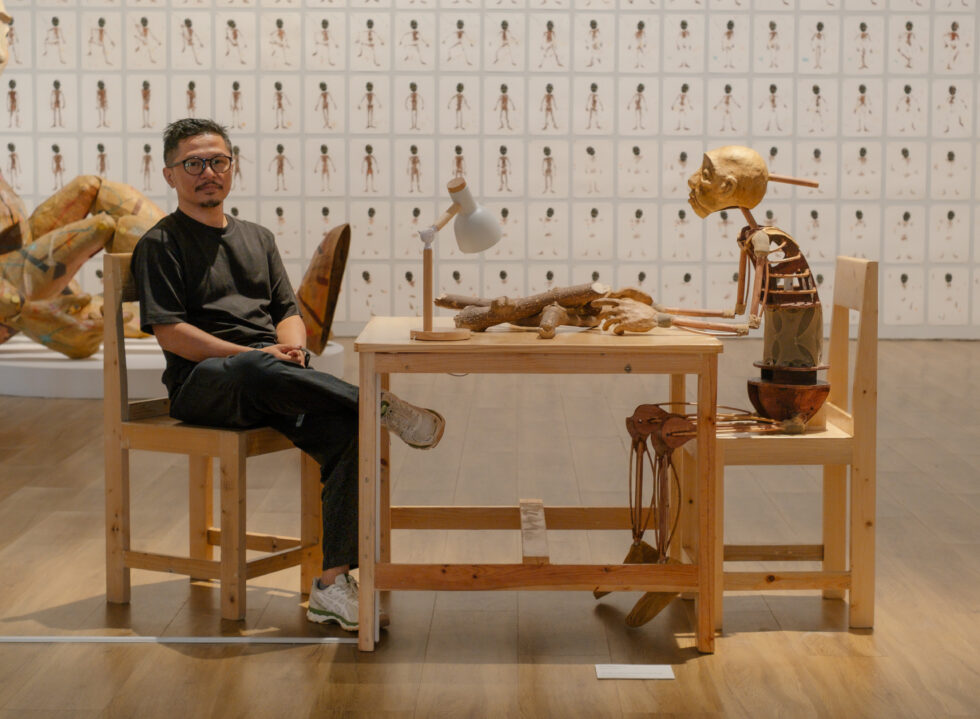
Meanwhile, Iwan Effendi probes power dynamics and human agency from a more intimate angle in Pulse for Pulse. In Mediator (2026), a human-sized skeletal puppet sits at a table opposite an empty chair so visitors can join and interact with it. “When the puppets are smaller, we hold power over them simply because we are bigger. But when they are human-sized, we perceive them as our equals,” explained Iwan, who is also the co-founder and artistic director of Papermoon Puppet Theatre. Yet that potential for agency gives way to heavy stillness in Lembam (2026), or inertia in English, where a monumental mud-mottled figure sits motionless, reflecting collective powerlessness after the 2025 Sumatra floods.
Slow handcraft in an automated age
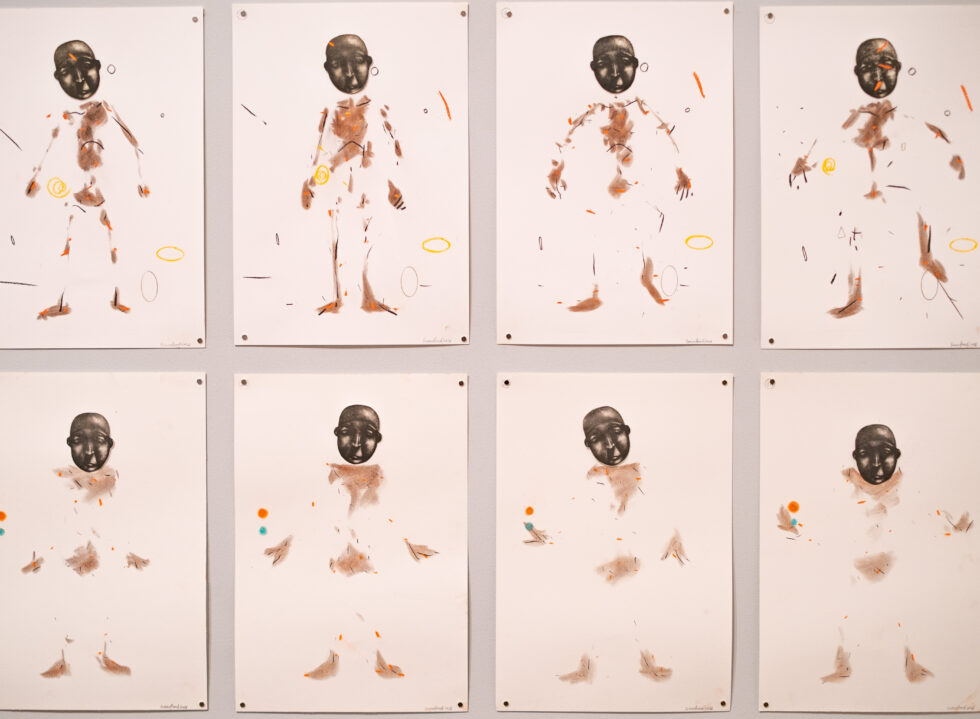
Beneath their conceptual critiques, all three exhibitions anchor themselves in painstaking physical craft. Moving his wooden figures away from the stage, Iwan arranges the puppets in a state of “in-between action” rather than setting them in theatrical poses. “I try to present the puppets in a state between expressions,” said Iwan, noting that before anyone laughs or stands, their muscles must first prepare to move. “So their movements are heading toward something, as if they are about to stir.” He charts this meticulous physicality in Preload #2 (2026), where he maps a puppet’s animation points across 264 sequential hand-drawn frames and compiles them into a looping video.
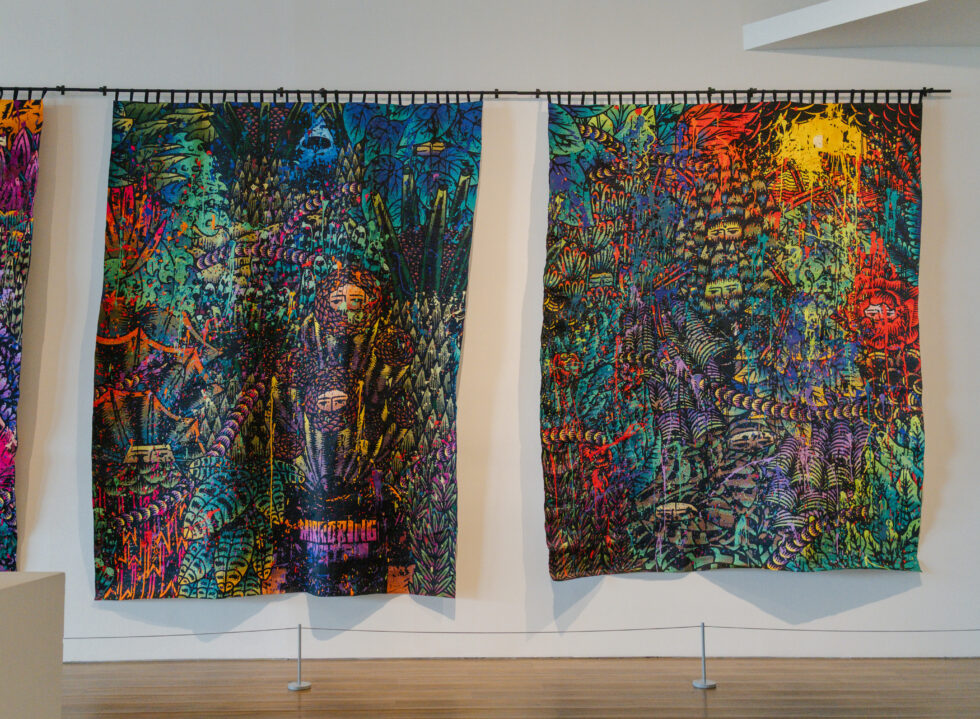
This focus on slow, physical labour is equally urgent in Eko’s Beautifully Decay (2026). The four-metre triptych tapestry shows a vibrant forest ecosystem alongside industrial debris, embroidered in vivid stitches that resemble paintings from afar. Eko collaborates with ageing master embroiderers in Yogyakarta and Tasikmalaya, whose livelihoods are threatened by computerised machines, giving the medium’s survival real stakes. “If these artisans stop working, that would be the end of my embroidered works,” he confessed, affirming his faith in slow craft. “Manual work will always remain, through whatever storm comes.”
Even Tromarama grounds its code-driven installations in tactile, DIY improvisation. “The ketok magic process is actually Indonesian citizens’ resourceful improvisation. Our work carries that same spirit,” explained Ruddy Hatumena. Ketok Magic details how the trio evolved from labour-intensive stop-motion experiments to binary code-driven installations. The former can be seen in their work Serigala Militia (2006), a stop-motion music video they created as a school project for the local rock band Seringai that is built from 450 hand-carved wooden panels. Here, physical handiwork sits side by side with automated systems.
Coming to Museum MACAN from vastly different directions, Eko Nugroho, Iwan Effendi and Tromarama offer a shared reflection on human agency. Whether through a hand-embroidered stitch, a well-poised puppet or a soprano recorder wired to an old piece of furniture, their works remind us that even within political and digital systems, human hands still hold the tools.
Scenic Disorder by Eko Nugroho, Pulse for Pulse by Iwan Effendi, and Ketok Magic by Tromarama run until 4 April 2027 at Museum MACAN. For more details and booking information, click here.