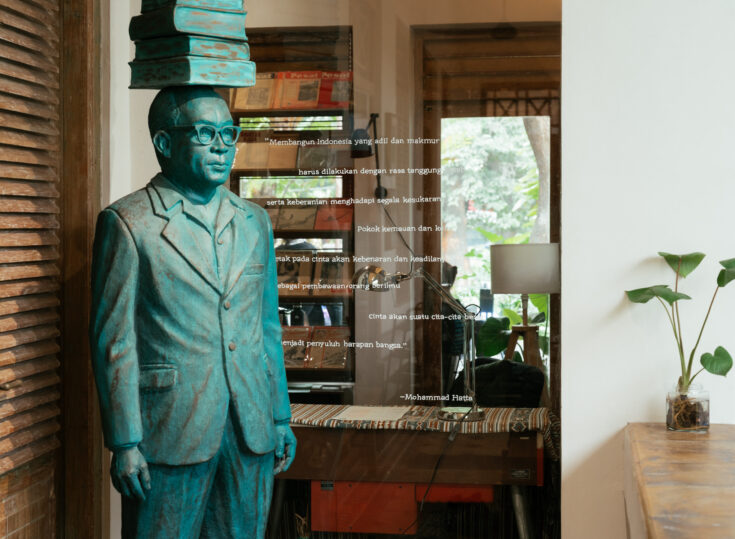
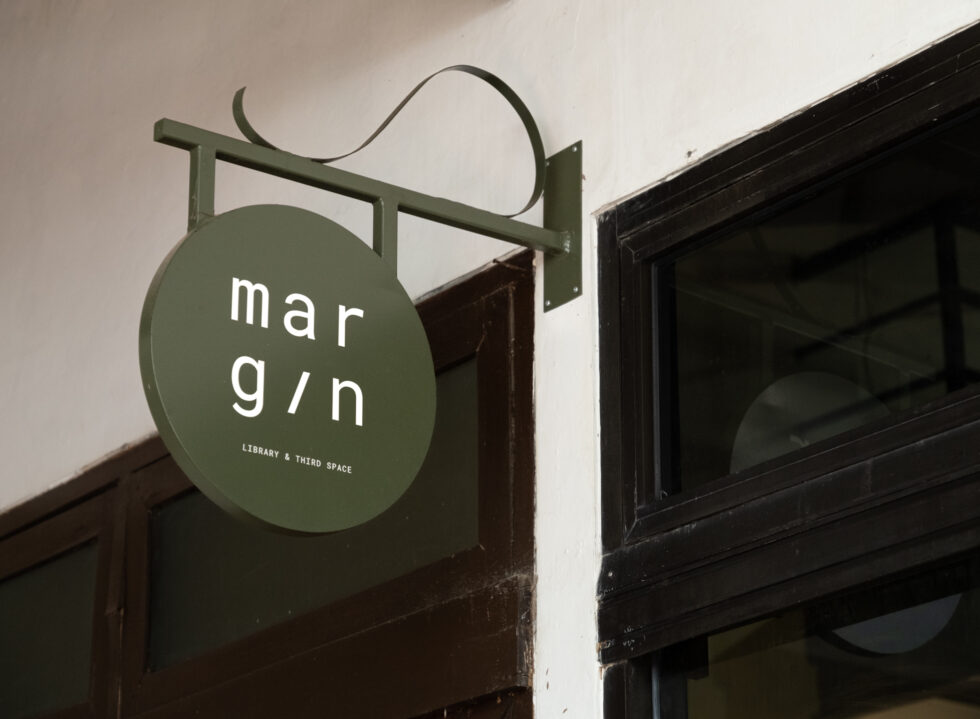
What began as a dream to own a library, as well as a shared frustration with how little room there is for depth and curiosity, has now become a reality for the three founders: Sheilla Njoto, Agatha Tika, and Reisky Handika.
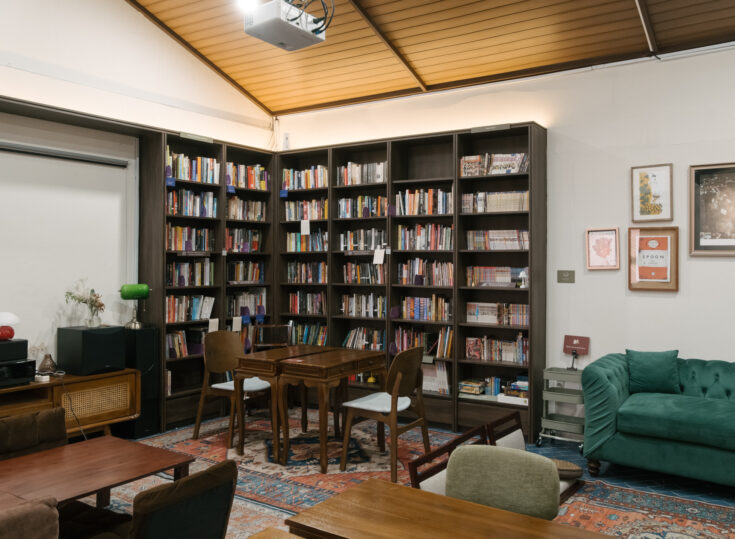
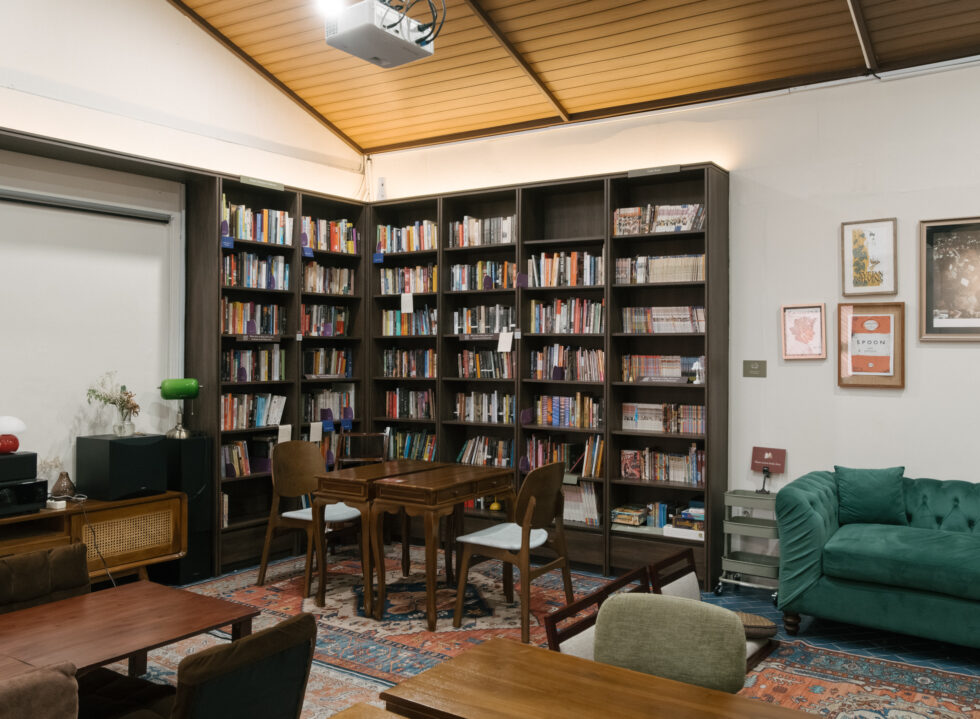
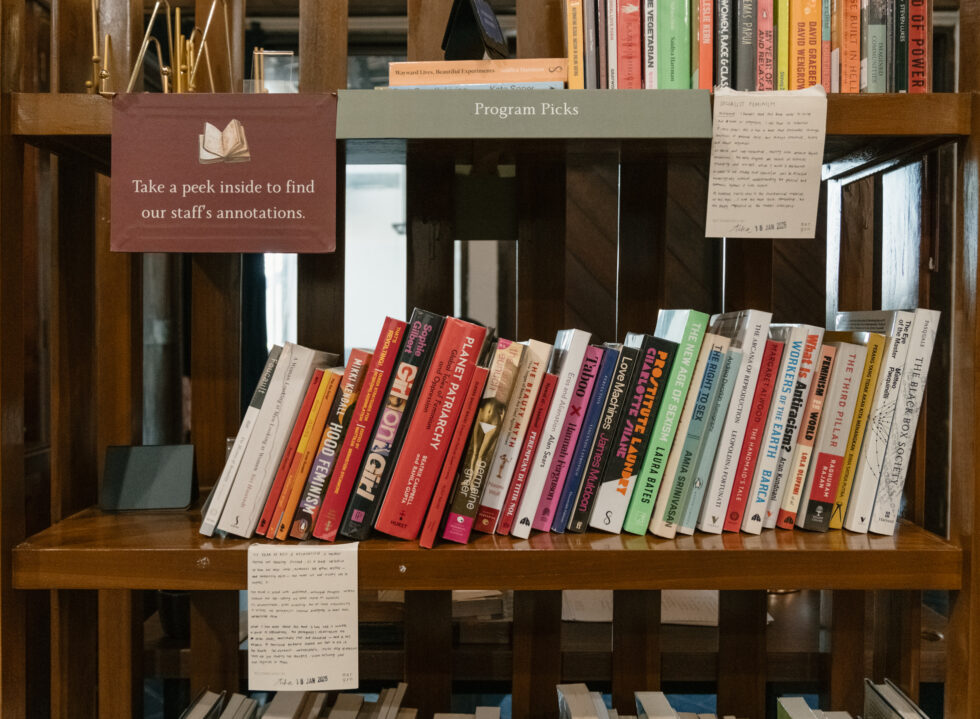
Hidden in a quiet corner of Pejaten, Margin’s shelves began with the founders’ personal libraries spanning sociology, politics, poetry, art, and beyond. The collection now revolves around a new theme every three months, with Margin assembling a dedicated bookshelf that responds to the broader public discourse on current events. Though people come here to work and read, that isn’t its only purpose. Nor is it the kind of library where everything must be quiet and untouched. Sheilla describes Margin more as a “moving space,” where young adults, artists, professionals, and communities from all walks of life circulate as freely as the books themselves.
Sheilla describes Margin more as a “moving space,” where young adults, artists, professionals, and communities from all walks of life circulate as freely as the books themselves. “I think it’s inevitable that people like us, who have so much passion but don’t have the space for it, to be in the margins,” she explains. “So, we call ourselves Margin because we want to represent these people. We are like this group of misfits who just have nowhere else to explore and express the things that we are interested in, because it’s not going to give you any profit.”
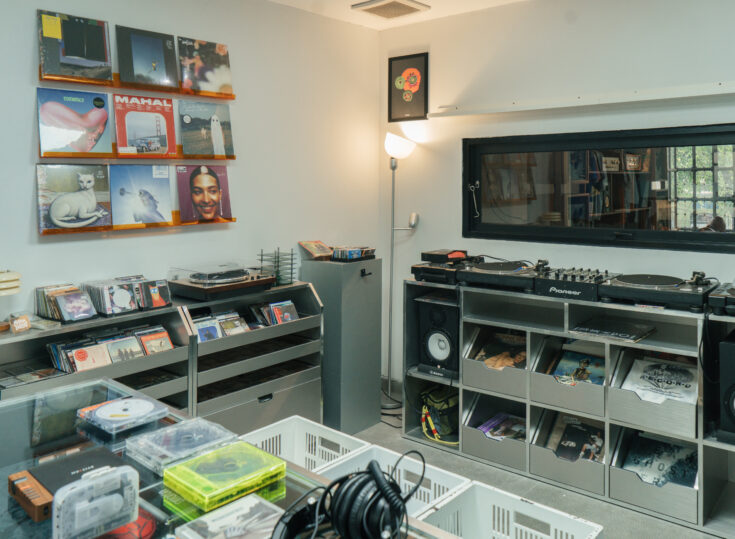
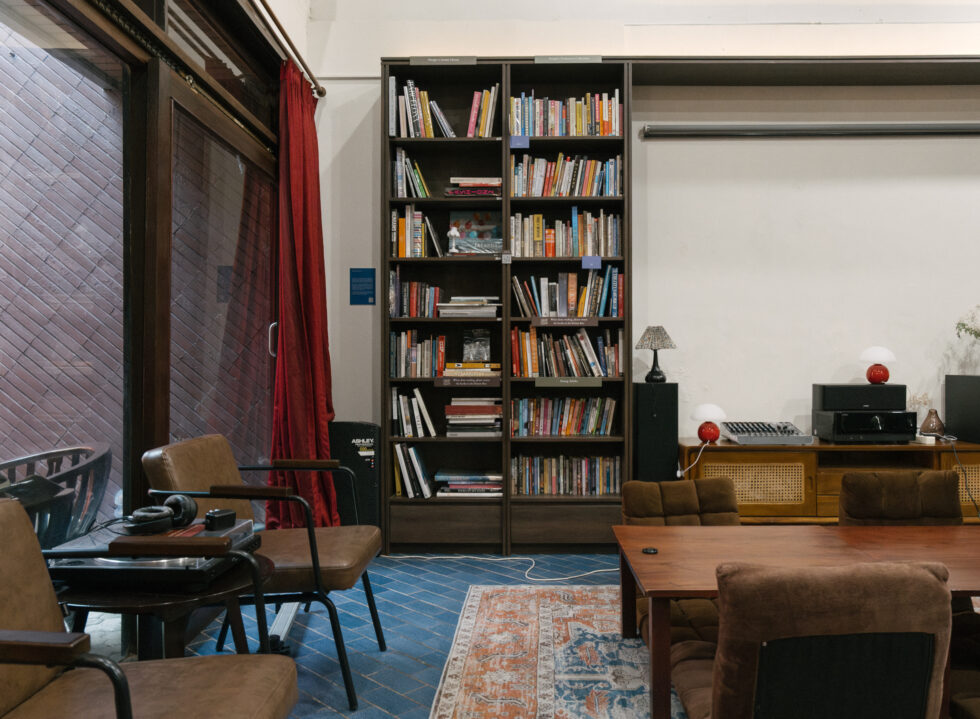
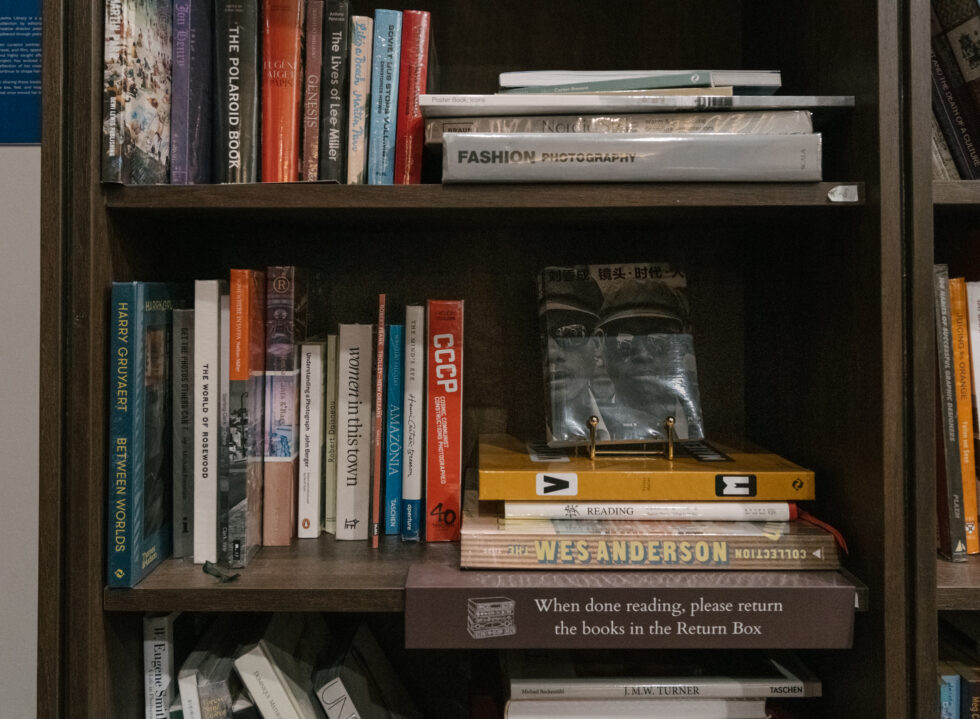
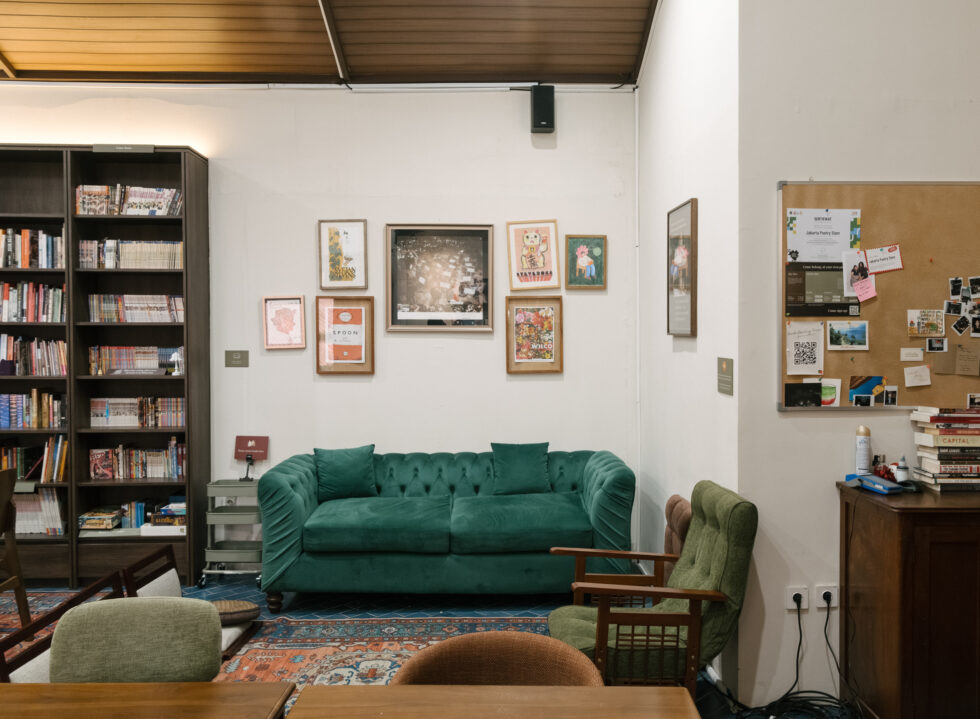
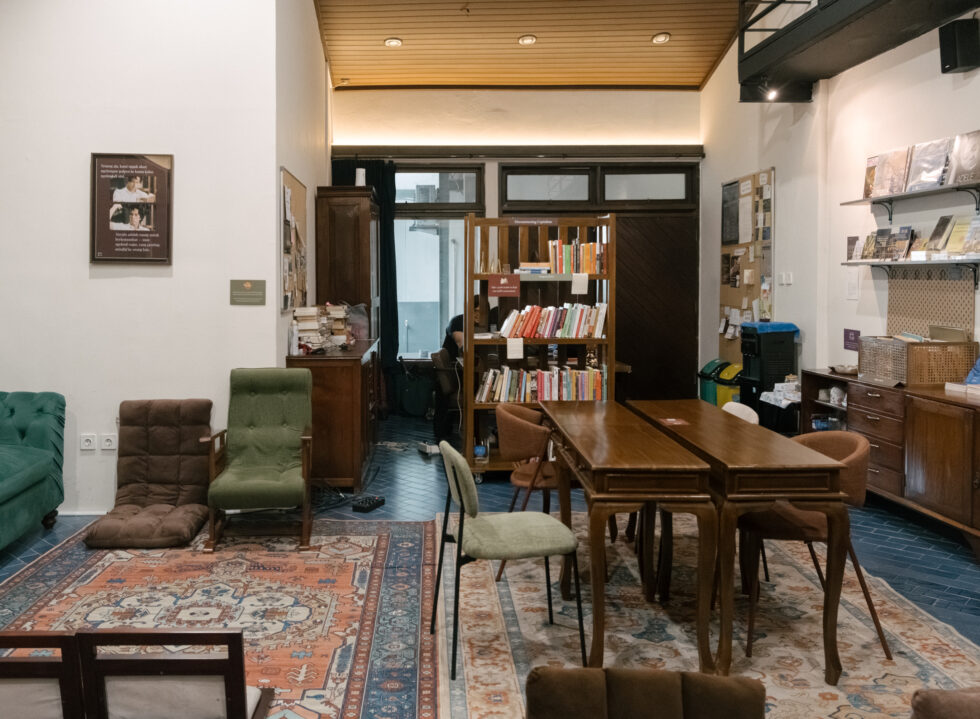
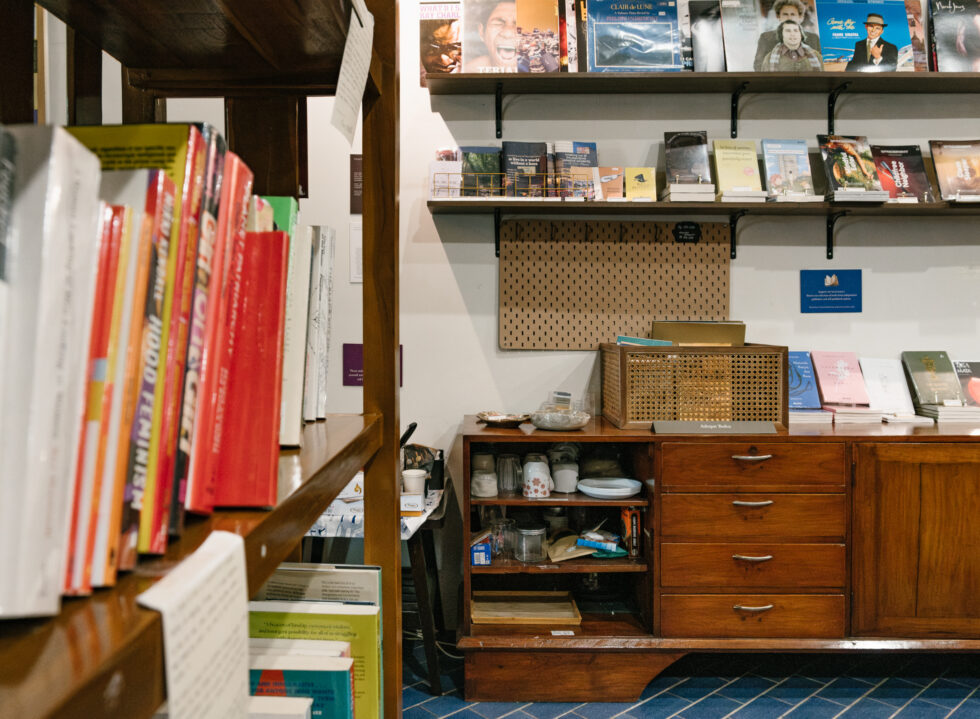
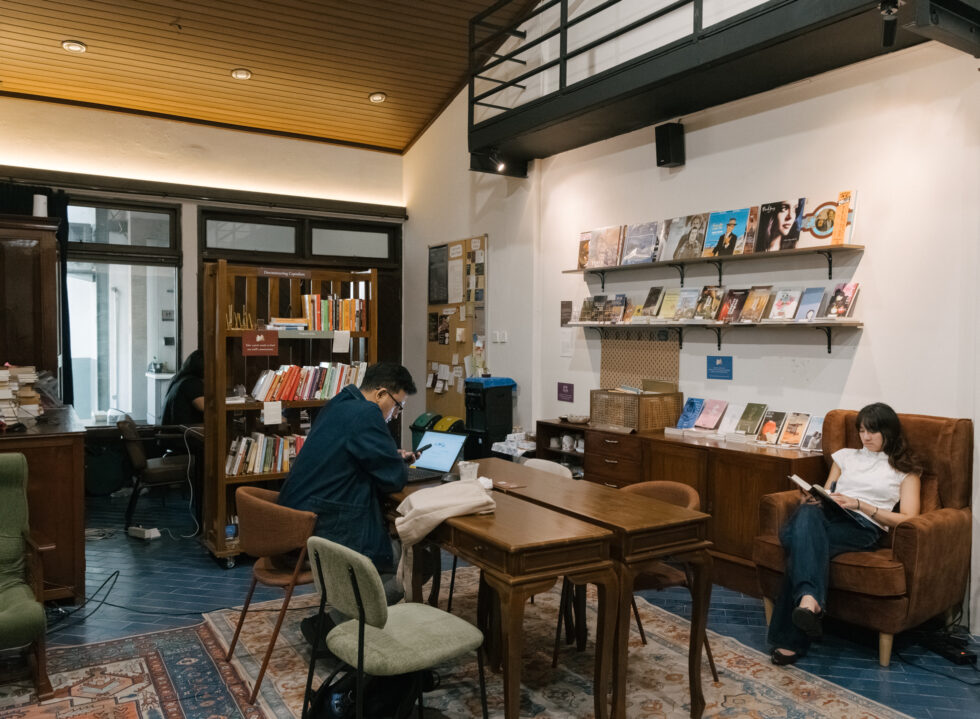
Inside, visitors are greeted by a towering bookshelf lined with titles ranging from Albert Camus’ The Stranger in its original French edition to a photo book documenting China’s social transformation from the 1940s to the 2020s. On the opposite side, another shelf with several books dedicated to technology, climate action, and society is lined with personal handwritten notes left behind by previous readers. Readers are free to settle in on the tables and seating areas that are scattered on the floor, while in another corner, a record player offers an alternative: visitors can choose a record, put on some music, and simply stay for a while.
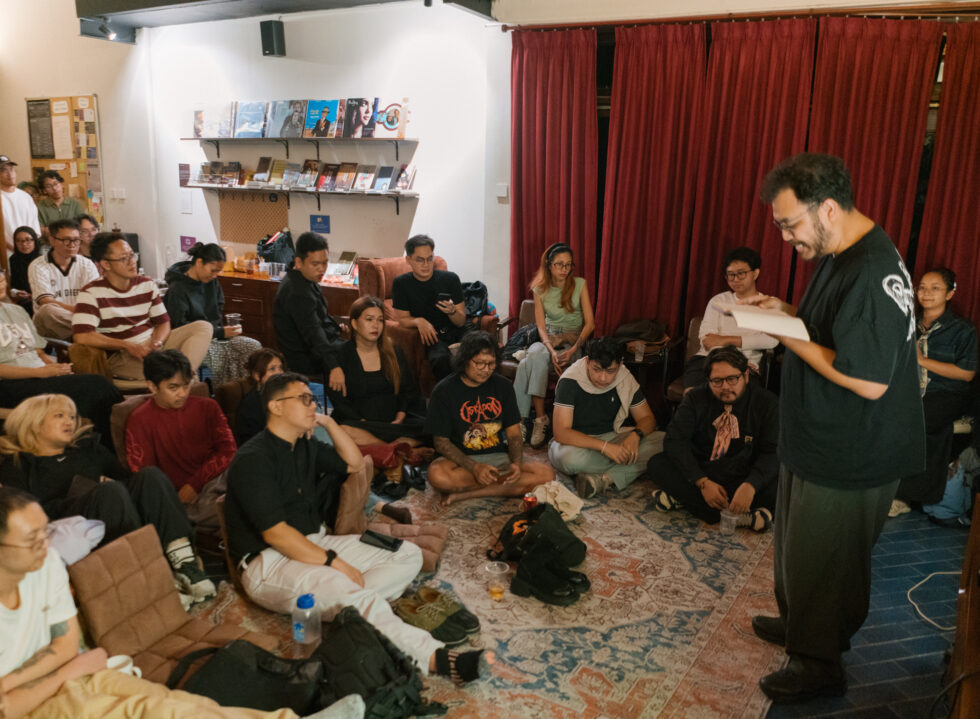
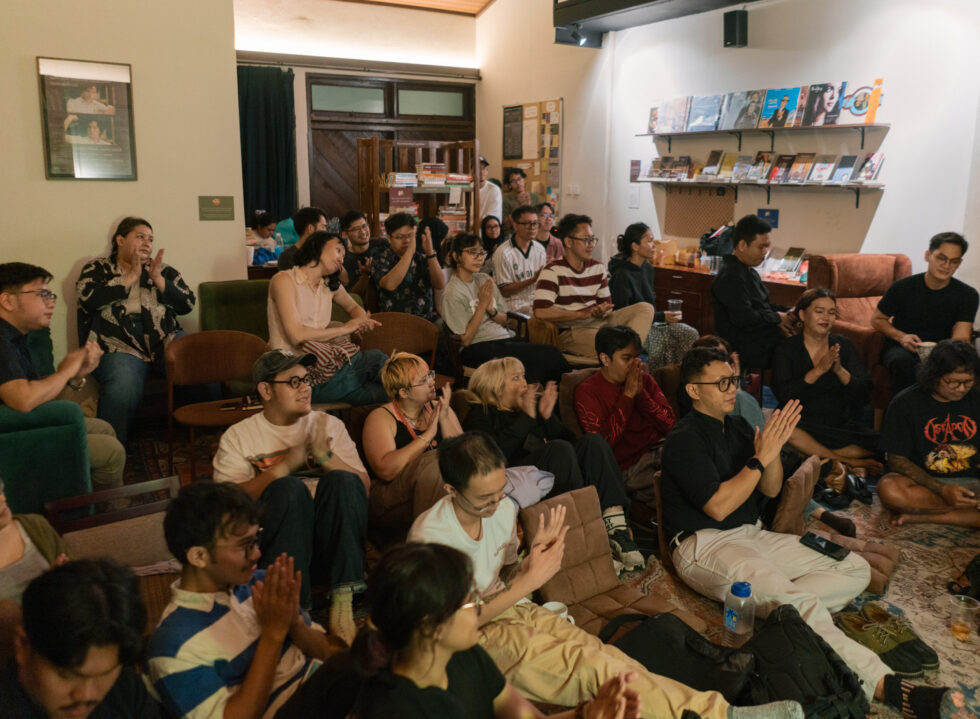
Mindful of Jakarta’s existing communities, the founders wanted Margin to become a place where they could find a home. Today, Margin has turned into a meeting point for artists, collectives and communities to bring ideas to life and host programs on their own terms. Among the communities that gather at Margin is Paviliun Puisi, whose Midnight Poetry sessions invite people to read anything from original poems to old text messages and even grocery lists. At one of these sessions, more than 50 poets crowded around the cosy, dimly lit room like old friends at a slumber party, all ready to have their necessary moments of release.
Margin has gradually become a home base people return to, not only for the books on its shelves, but for the conversations, gatherings, and communities that continue to shape the space. In a world that can often feel despairing, the founders hope that Margin continues to be a place where people feel safe enough to dream of their ideal world, and then to come out of it feeling empowered and energised enough to carry a little bit of that Margin spirit back into the world.