It can be disorientating to take in a runway show when demonstrations were happening out on the streets. As people gathered to demand accountability from the government, calling attention to everything from environmental neglect to social injustices, the shows taking place inside Jakarta Fashion Week were inevitably cast in a different light. This raises a question of what we, as spectators, are expecting from fashion in the first place. Are we simply looking for images to be circulated and regurgitated across our screens, or should there be something more?
More importantly, what is on the minds of the designers and creative directors when they put together a collection? Are they proposing how we might want to dress a few months from now, when the clothes finally make their way into stores and stockists? Or are they offering a different perspective on how we might reconcile our love for fashion, personal style and the simple pleasure of dressing up with the reality of the chaotic world we live in?
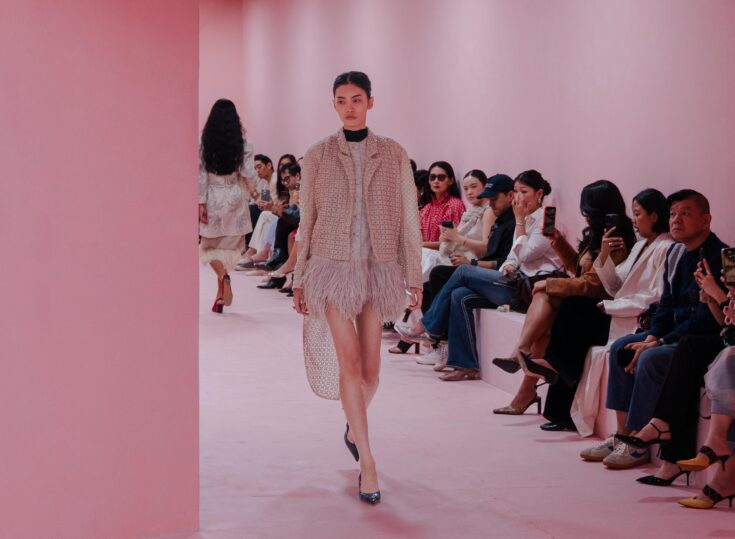
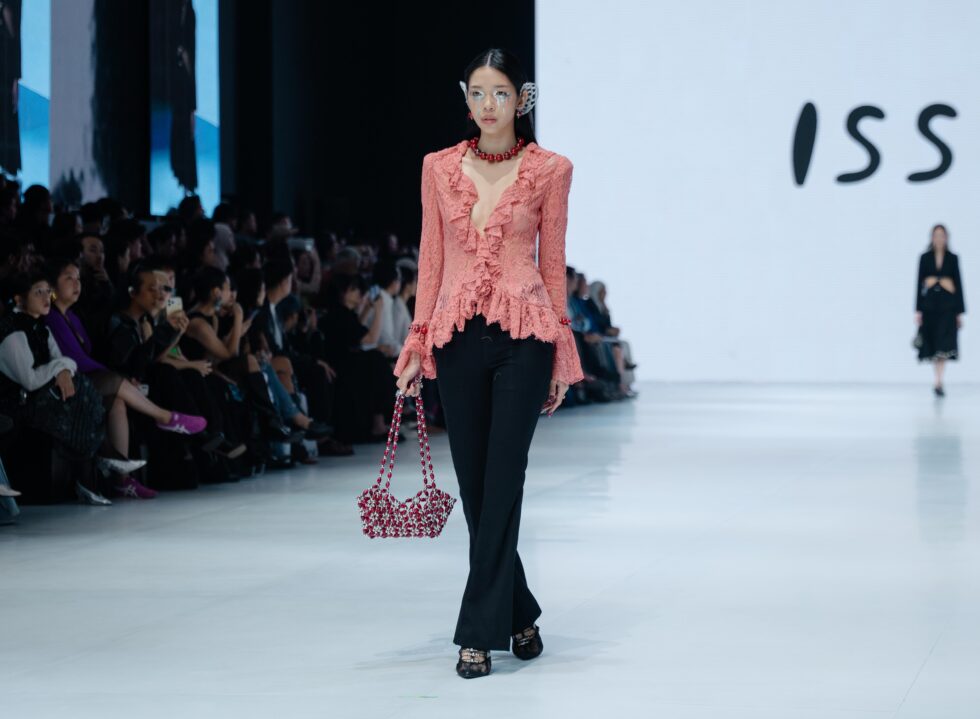
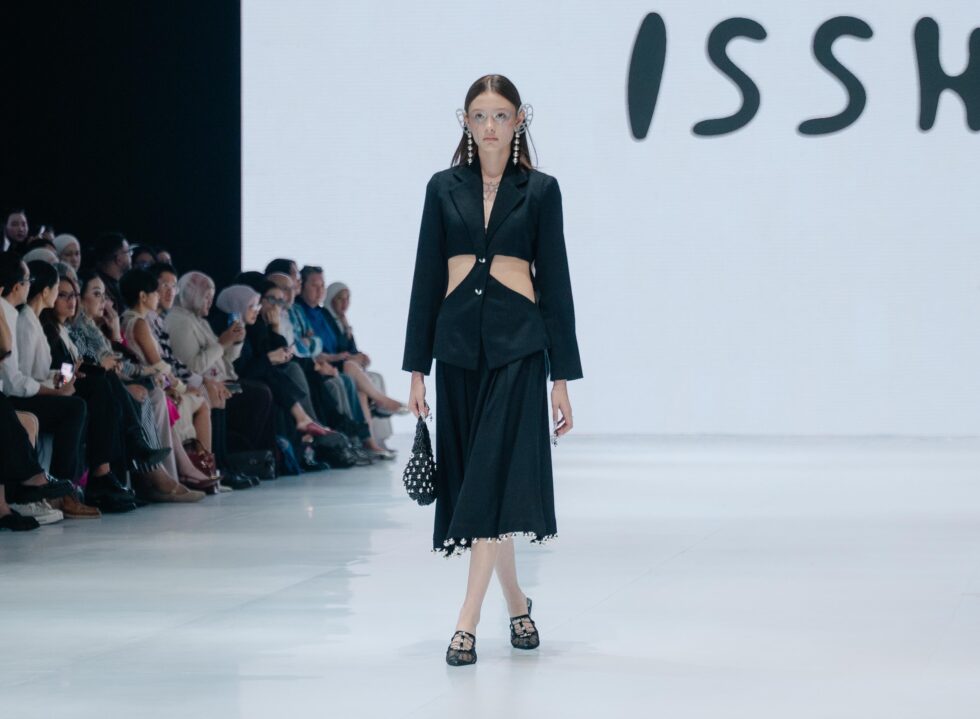
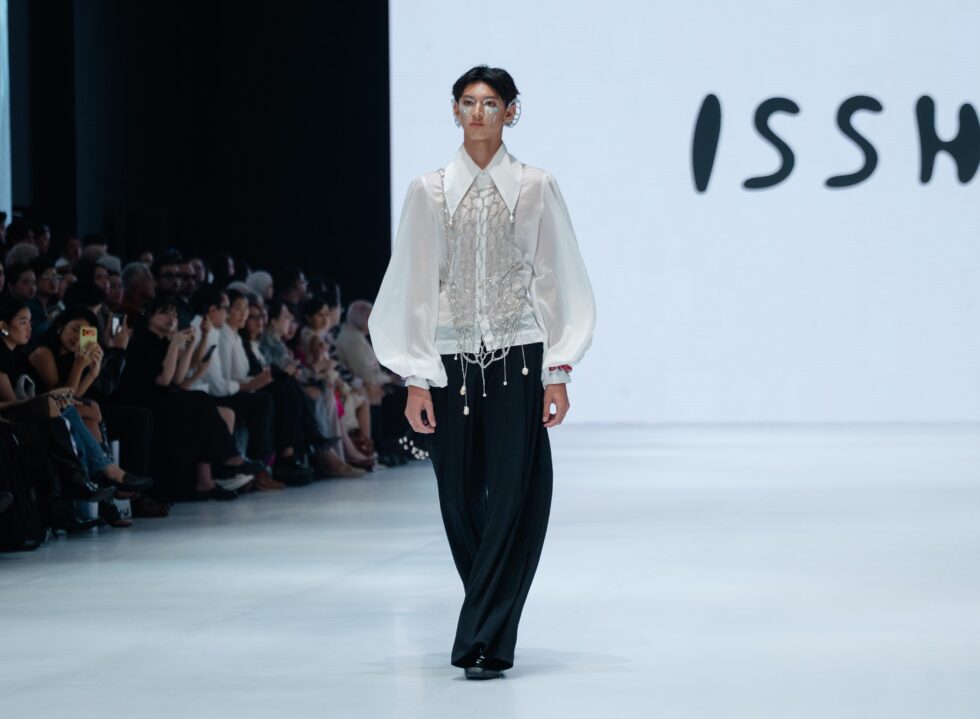
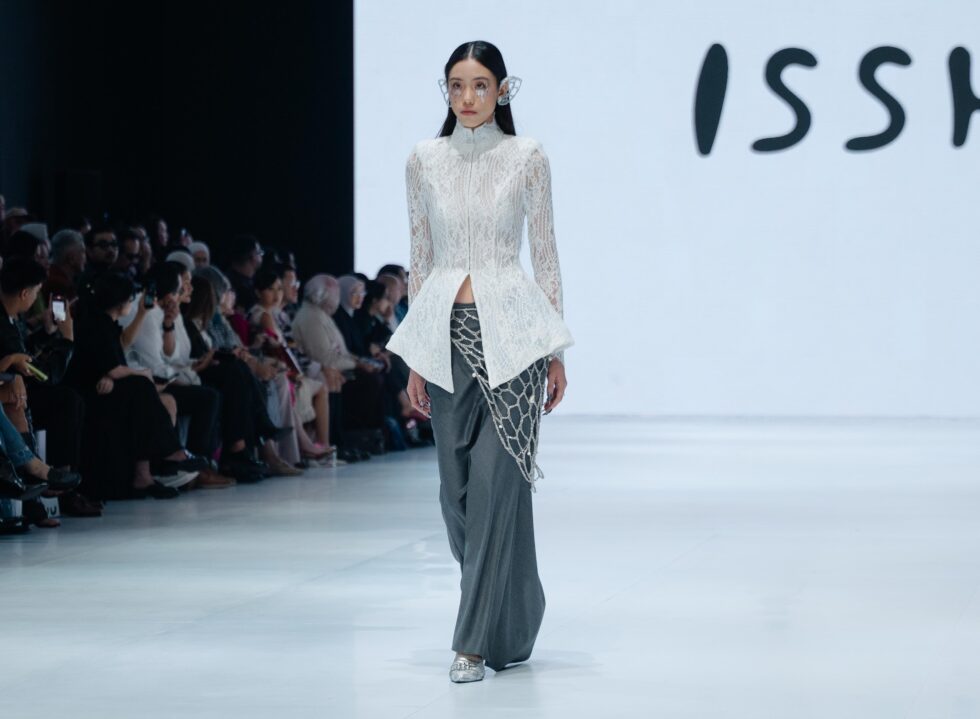
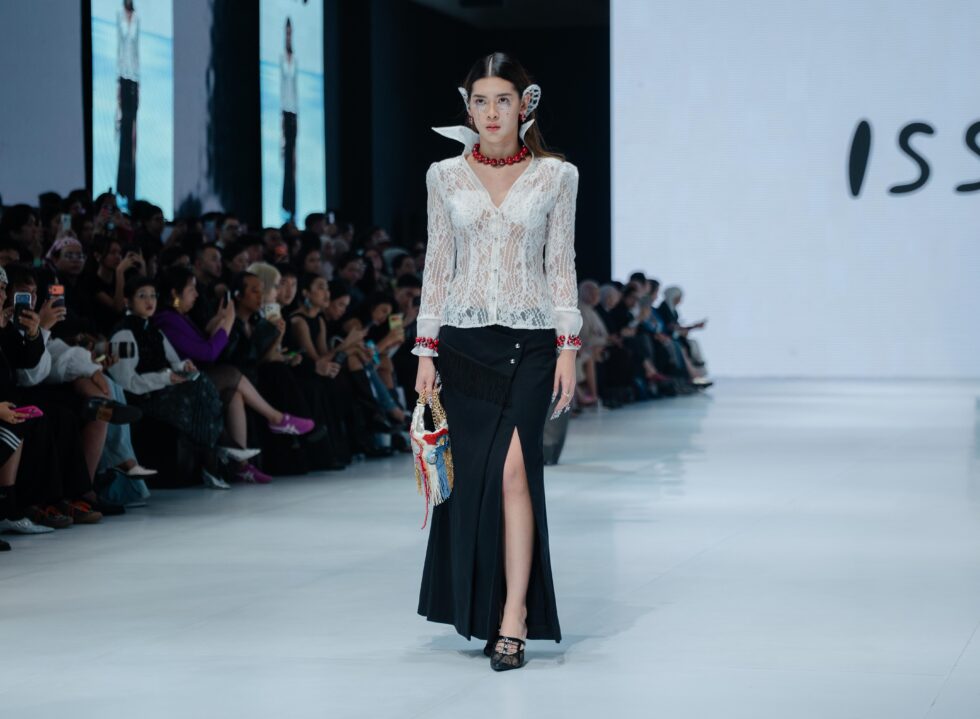
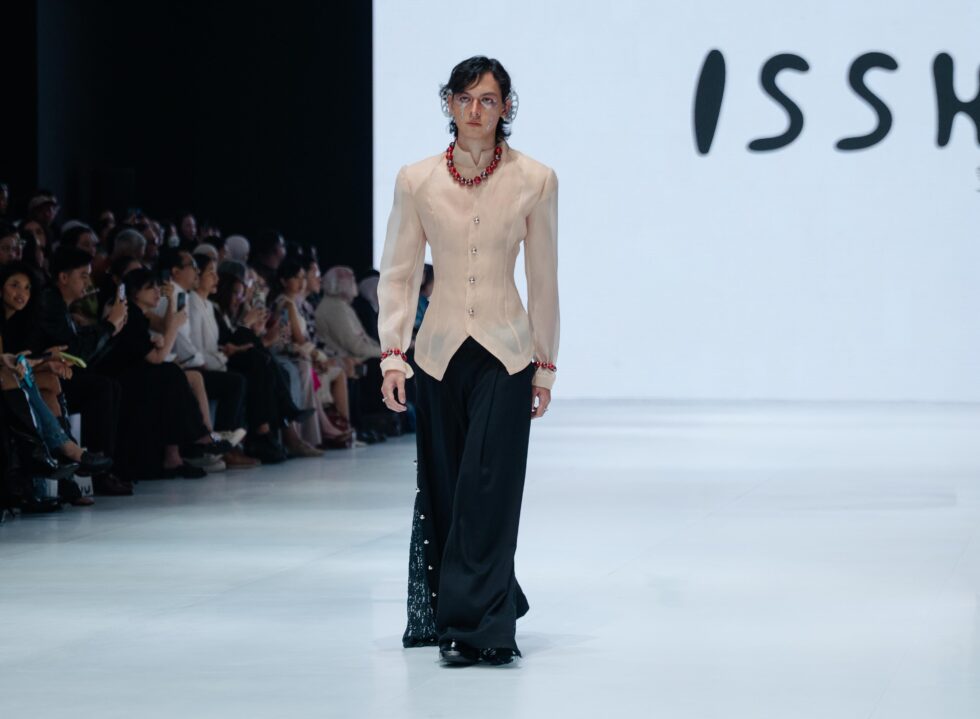
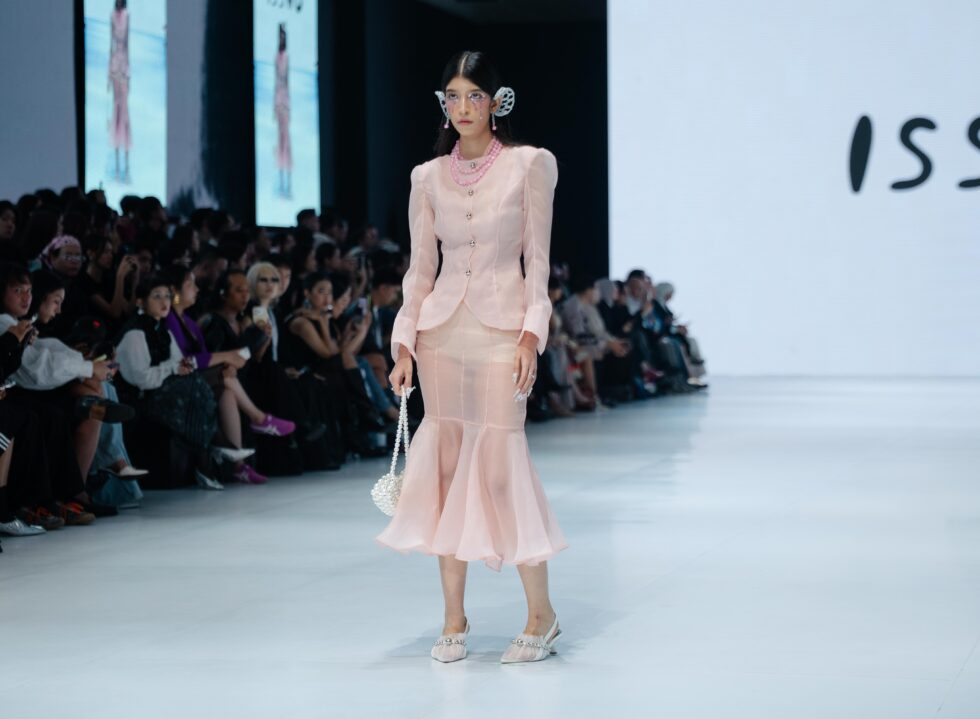
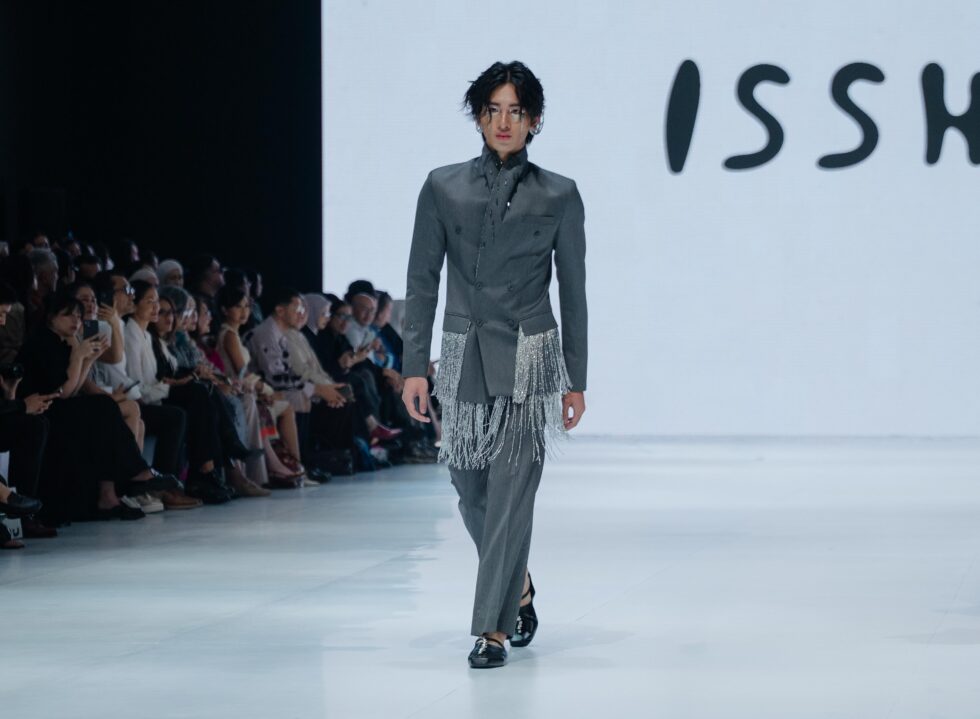
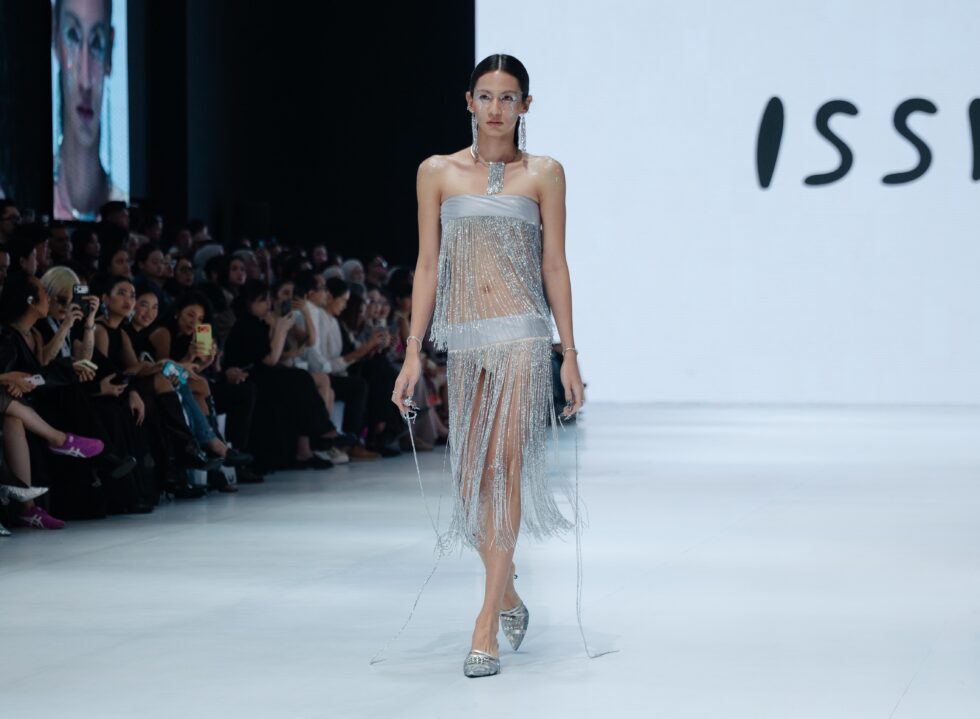
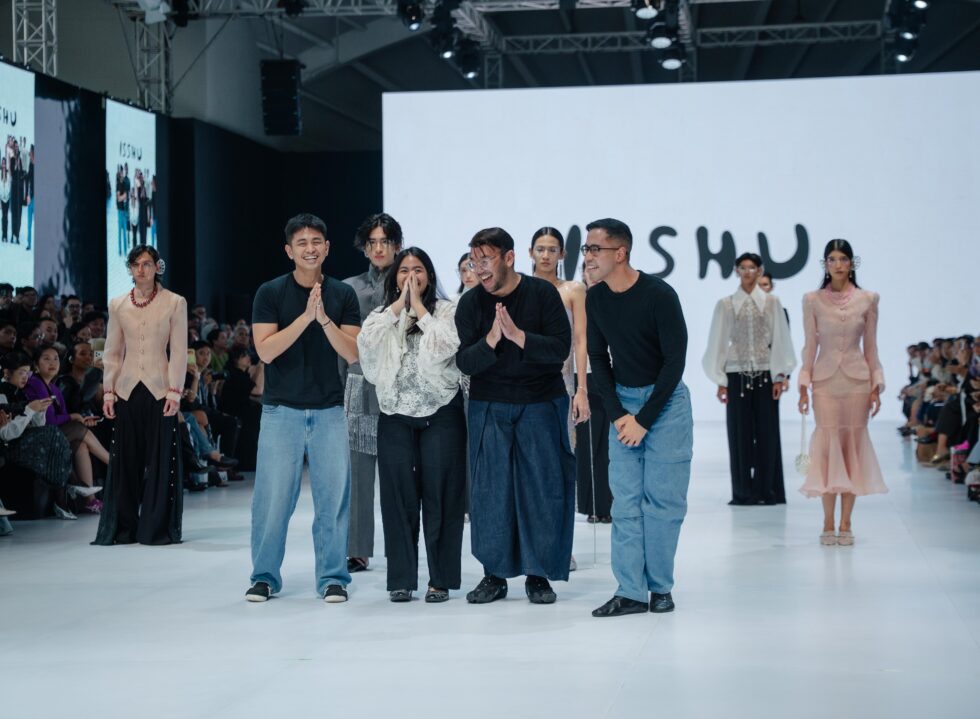
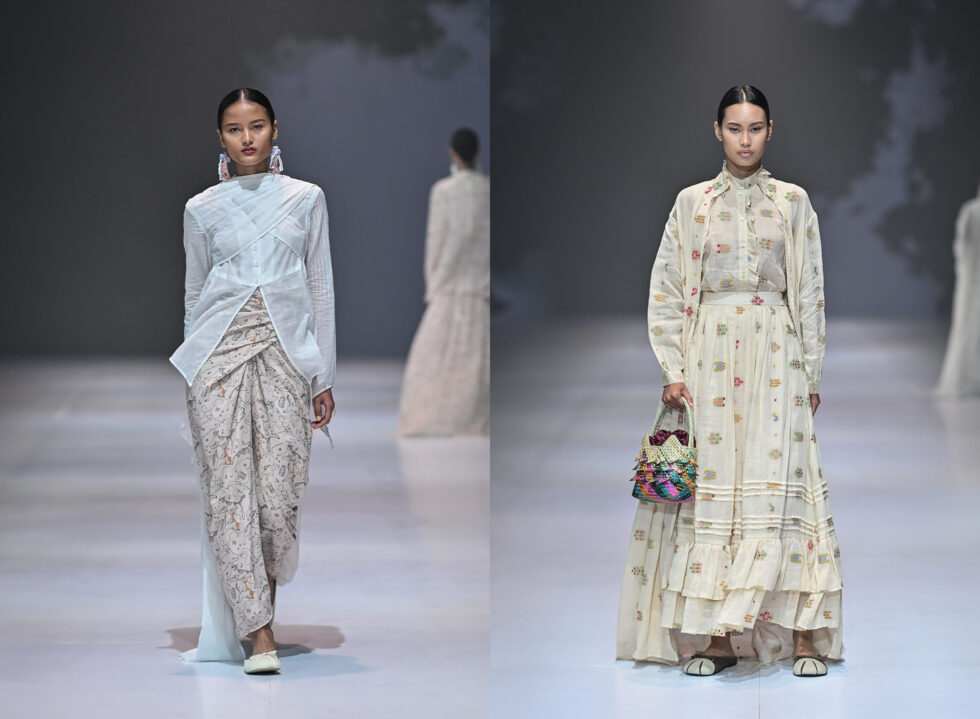
Rheza Pahleva of ISSHU, along with creative director Liko Sukhoy and collaborator Sarah Viarose, sent out looks that conjured up an imaginary amphibious race rising from the sea. Lace blouse clung to the body like fishing nets, beaded fringes spilled from suit pockets as if emerging from the water, while mesh belt hung from the waist like nets hauling in gleaming shells. The silver-beaded bags that first brought the brand into the spotlight also returned in new iterations.
But beyond the visual appeal, the larger question remains: what does ISSHU really stand for? The brand has shown that it can put together looks that catch the eye and appeal to a crowd. What it needs now is a stronger point of view, something that can give its growing vocabulary of accessories and ready-to-wear a clearer sense of direction. Perhaps what ISSHU needs at this stage is not another creative collaborator, but someone with a business mind who can help define what the brand could become, and how to get there.
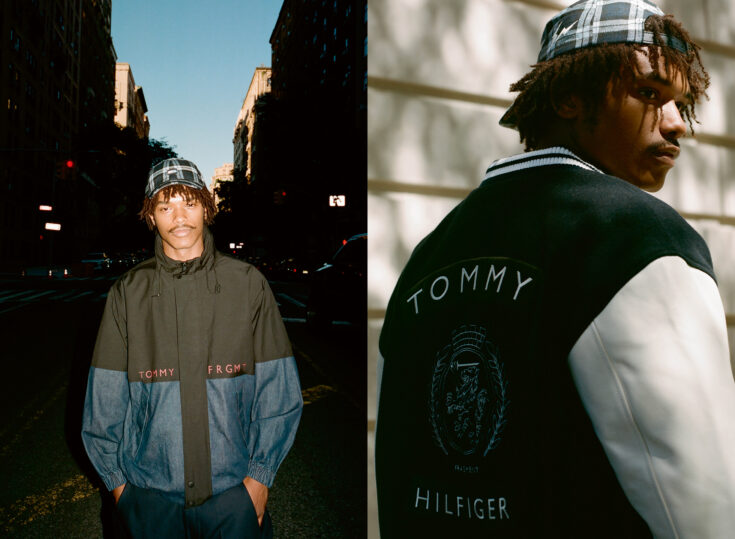
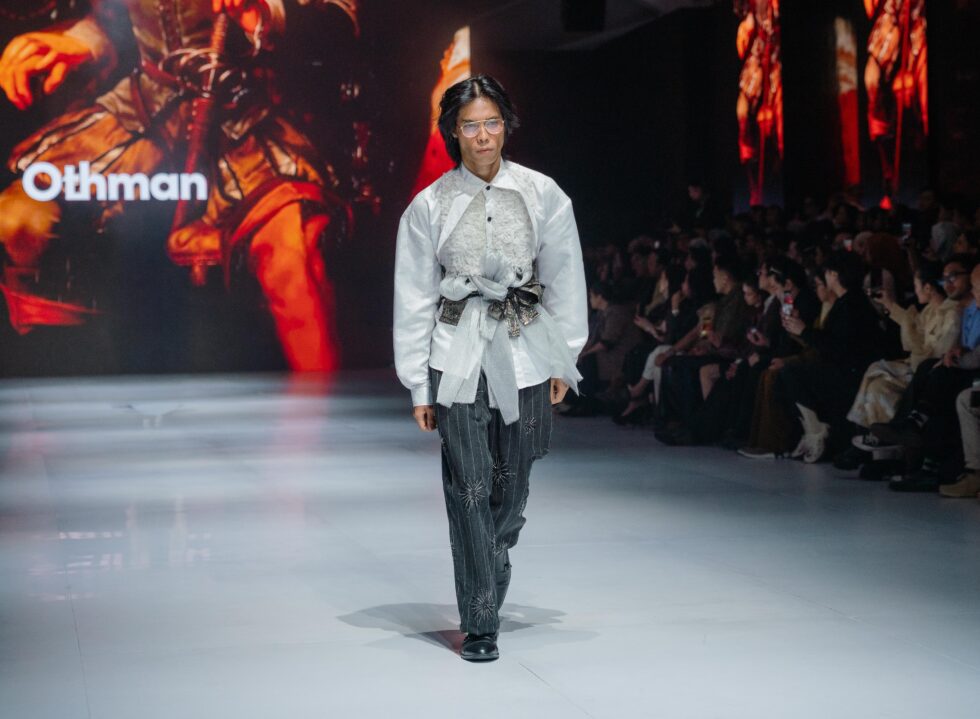
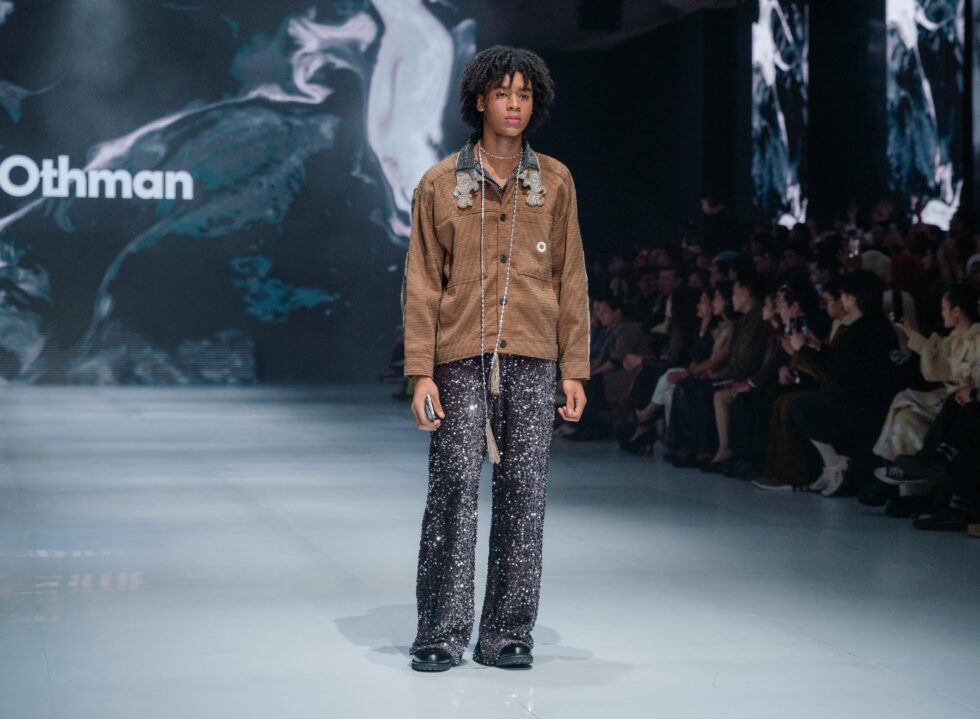
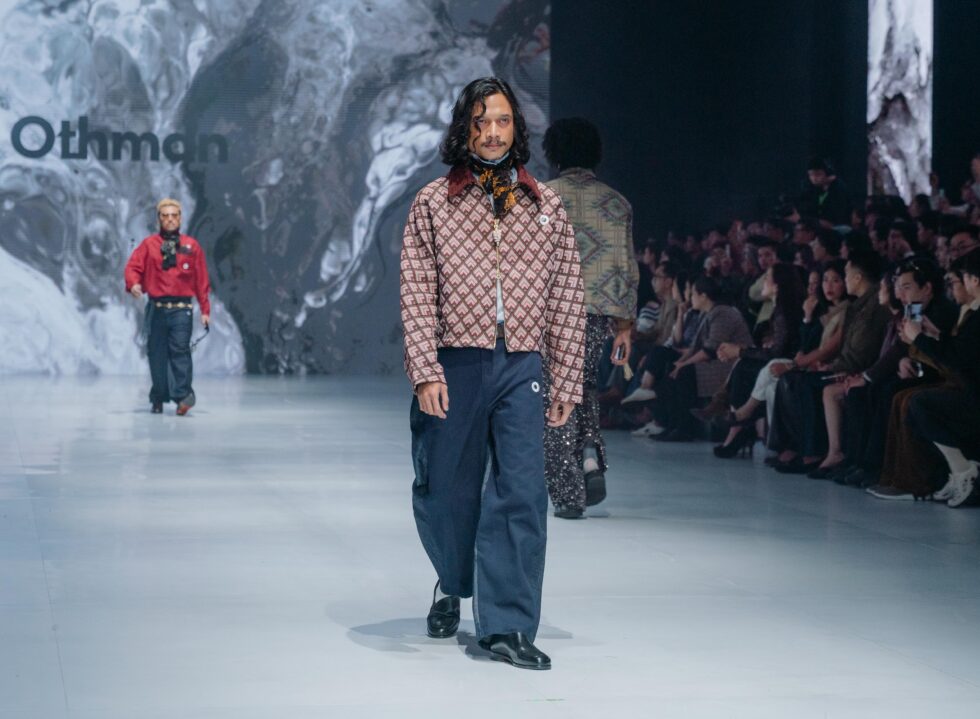
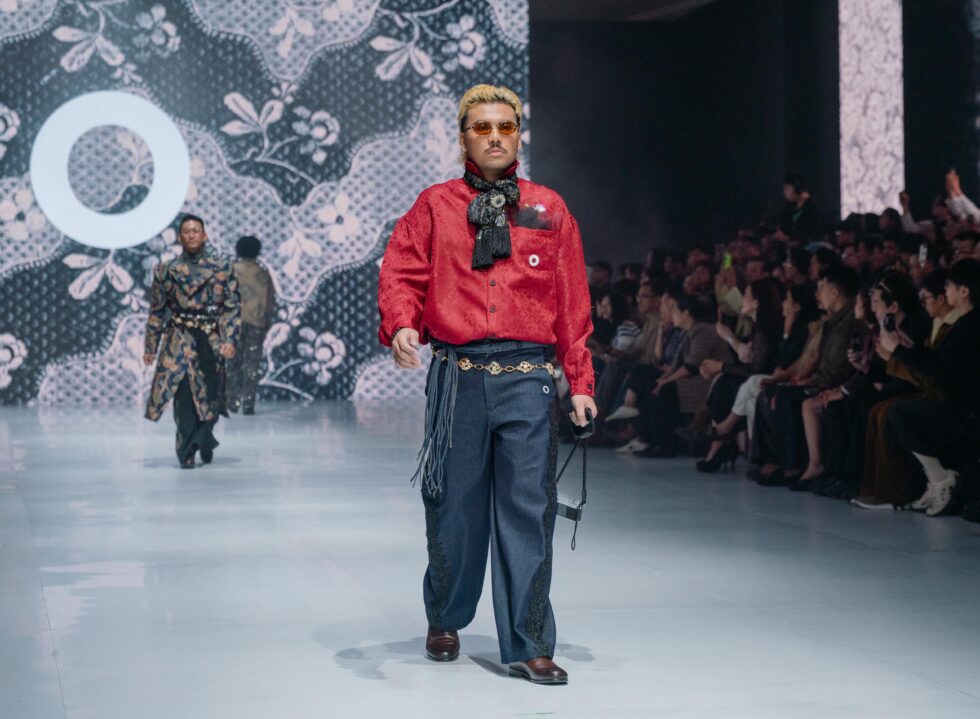
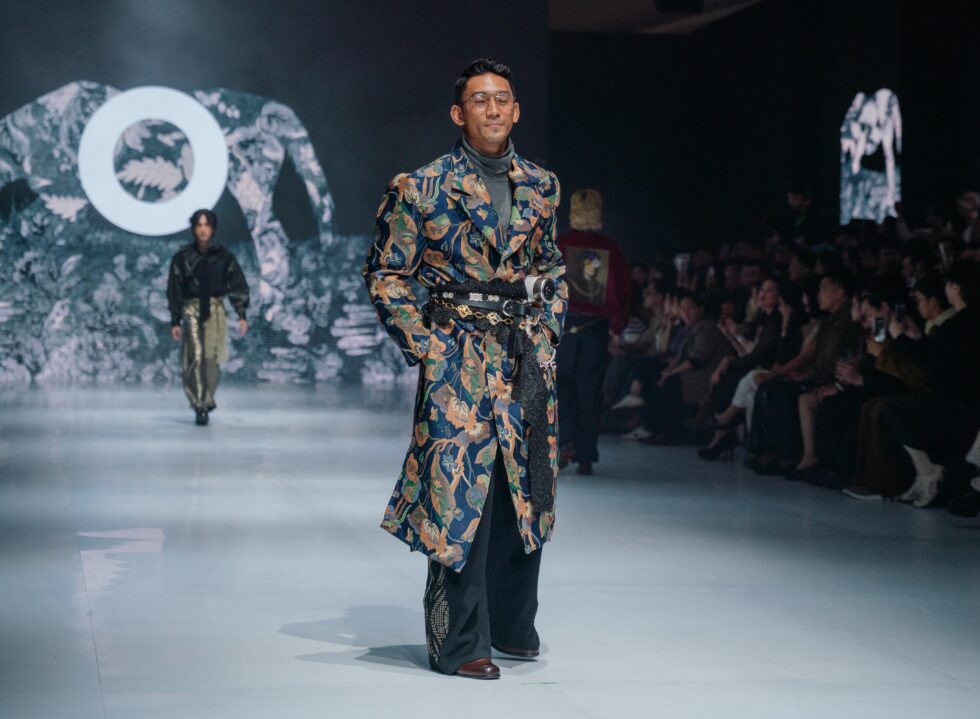
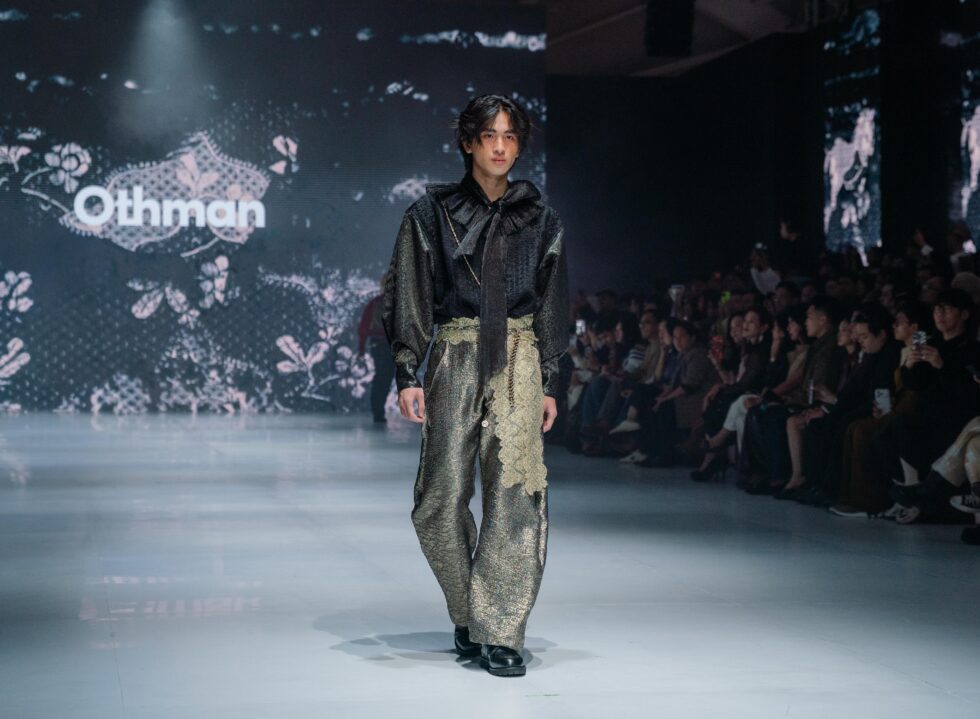
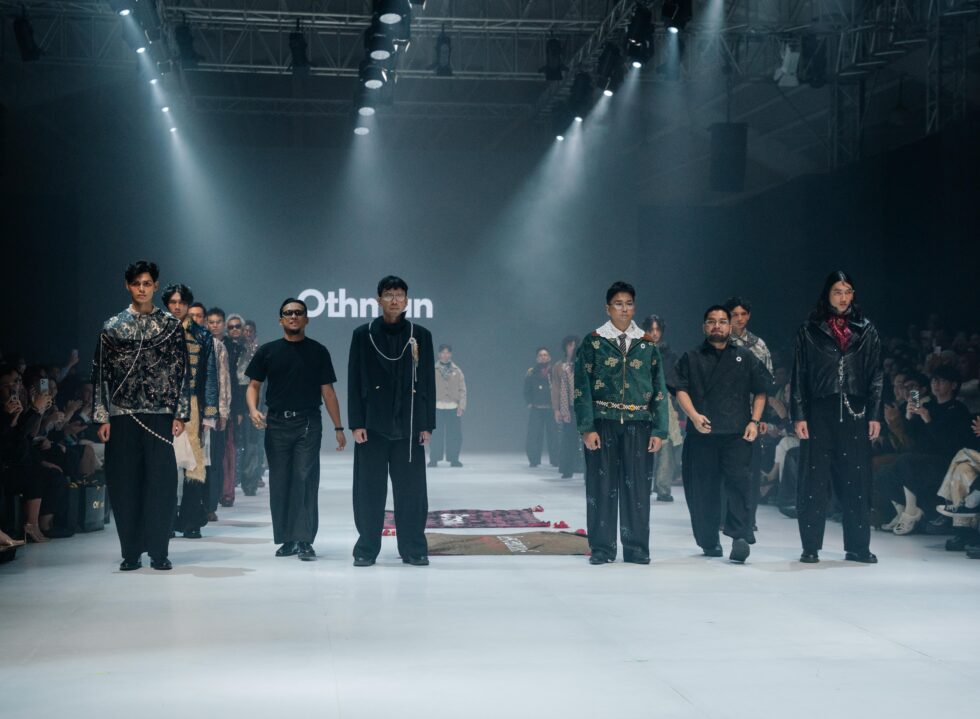
It is hard to escape OTHMAN’s presence during fashion week. Its jackets, recognisable for their stylised florals and geometric patterns, are easy to spot on showgoers. The small white “o” embroidered on the chest acts almost like a badge. Every once in a while, a new label comes along and becomes the unofficial uniform of Jakarta’s in-crowd, a way of signalling that one is a little ahead of everyone else. OTHMAN has been filling that gap lately.
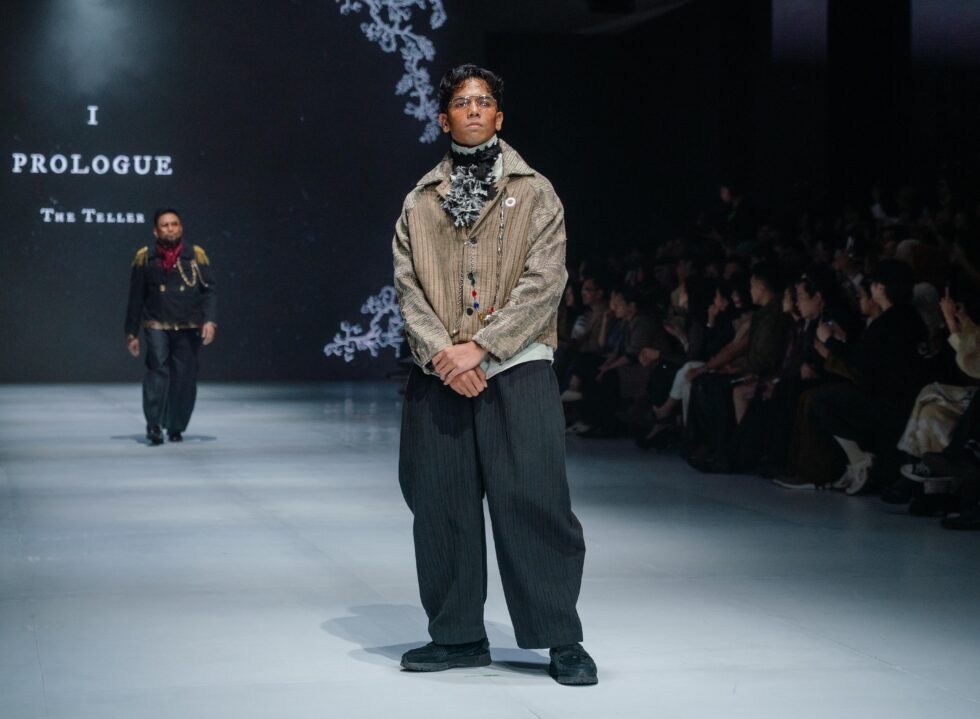
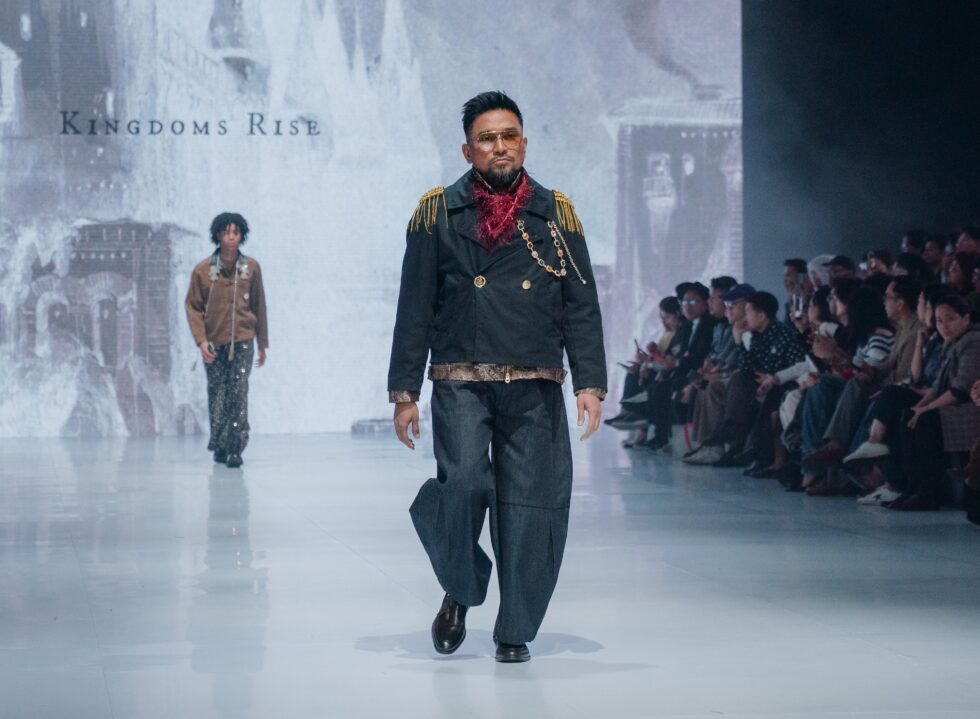
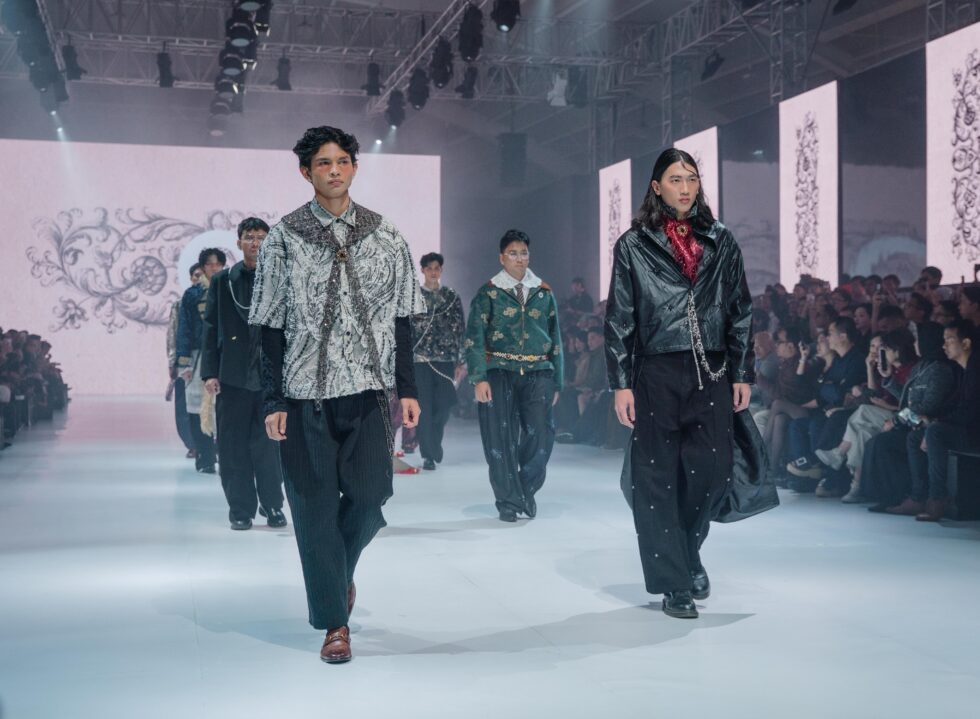
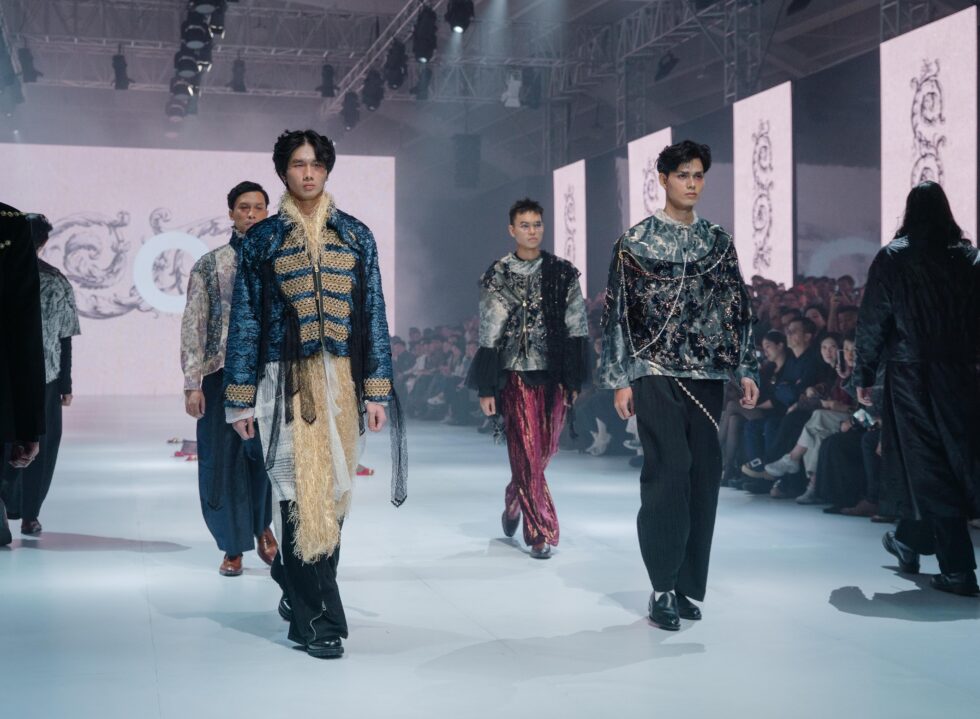
Founders Dimboy and Oby Reza turned to the language of aristocracy, framing the show as a rebellion against the conventions of the royal household. There was an invitation to rise up, to band together and challenge the old order. Yet the whole affair still seemed rather concerned with looking the part while doing so. The runway became a spectacle of its own making.
A trio of male models walked out, led by a figure dressed in an aristocratic cape coat complete with a sceptre. The collection borrowed from the trappings of nobility through brocade, ornate embellishments, voluminous silhouettes. The sort of decorative excess one might find in a grand old residence. But in the context of the demonstrations, the choice felt oddly misplaced. It was a parade of men in costume.
It was hard not to think of Lord of the Flies. Only instead of being stranded on an island, this group of men seemed to have found themselves in an empty castle, fashioning their looks out of its ornate curtains, tablecloths and upholstery before declaring themselves the founders of a new kingdom. We know how that ends. For all its talk of rebellion, the spectacle ultimately rang hollow.
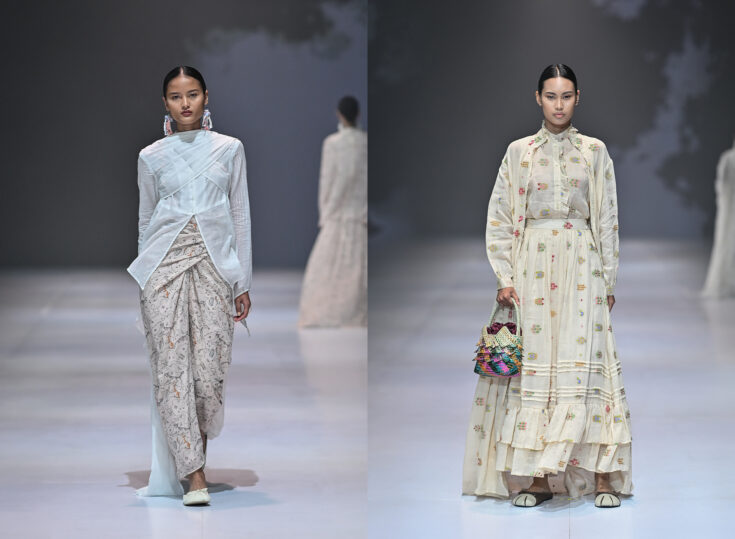
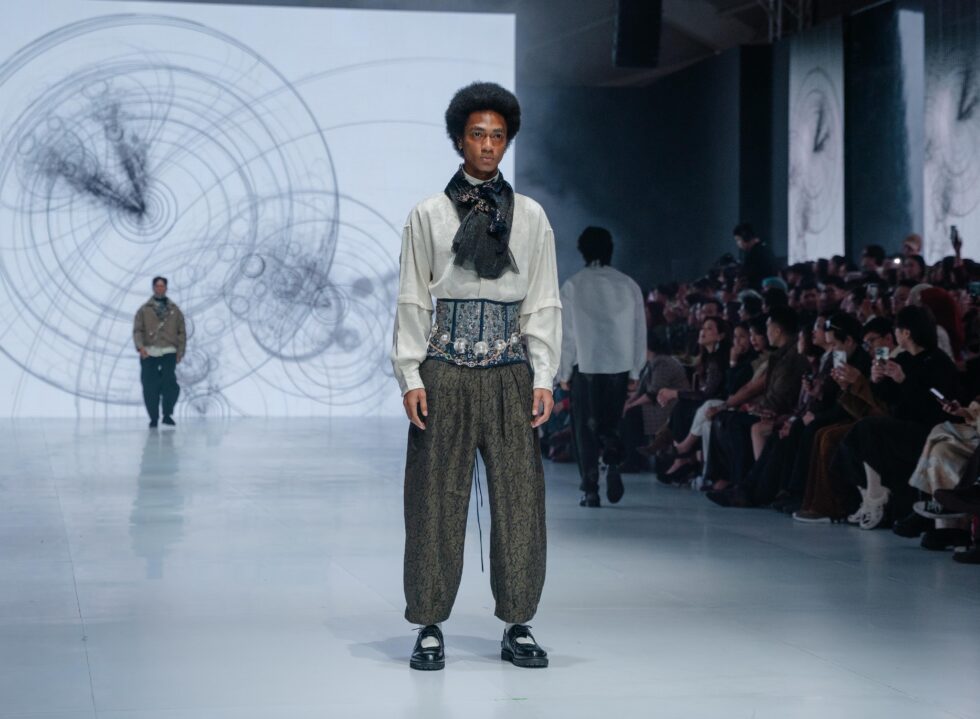
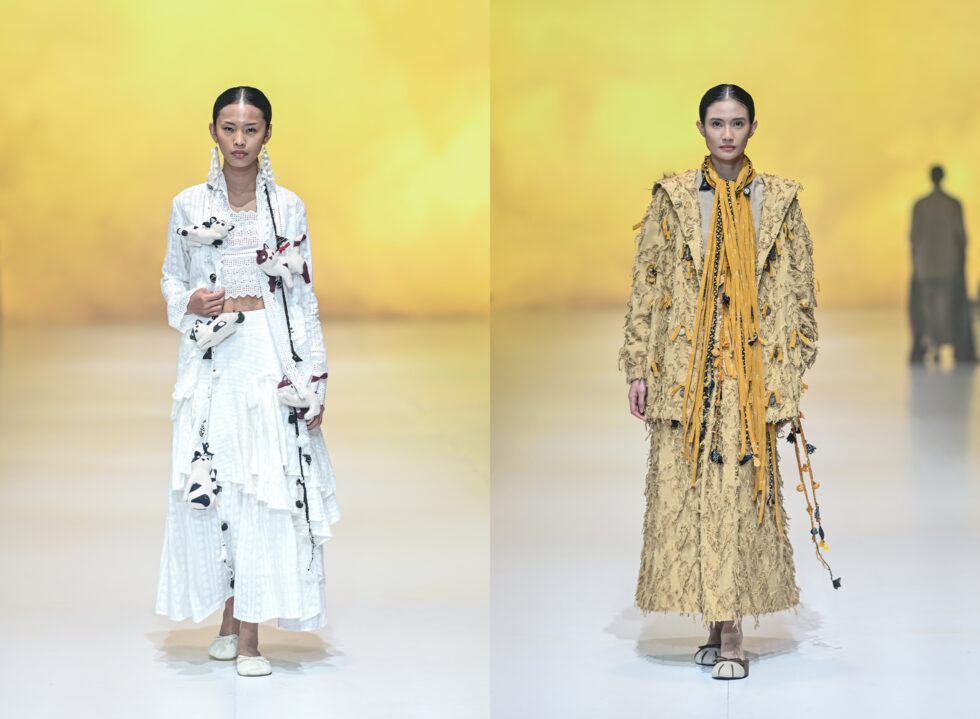
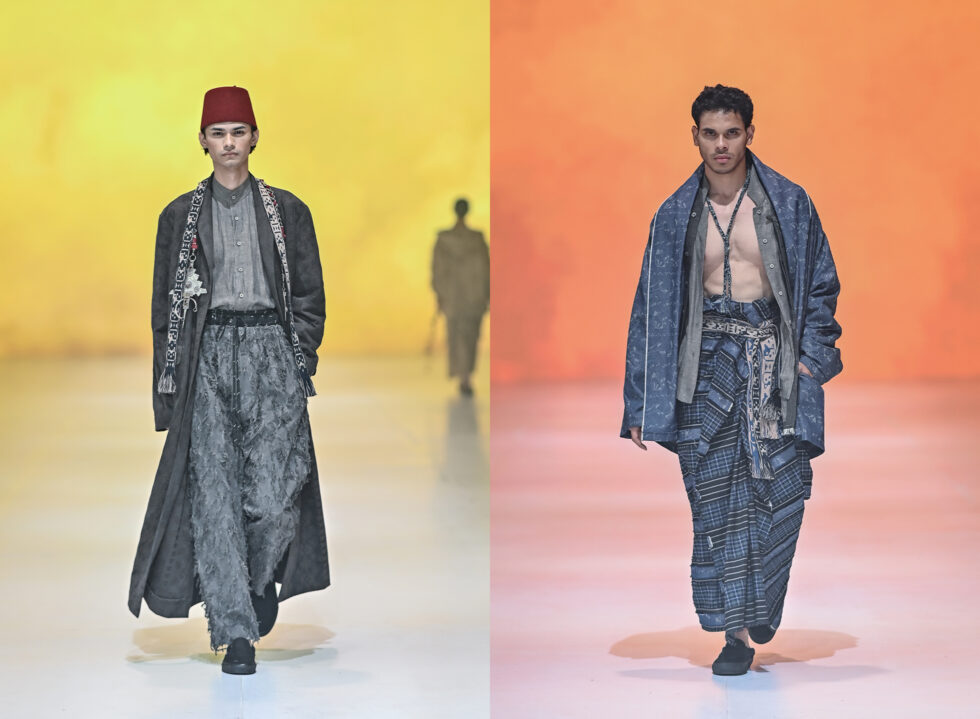
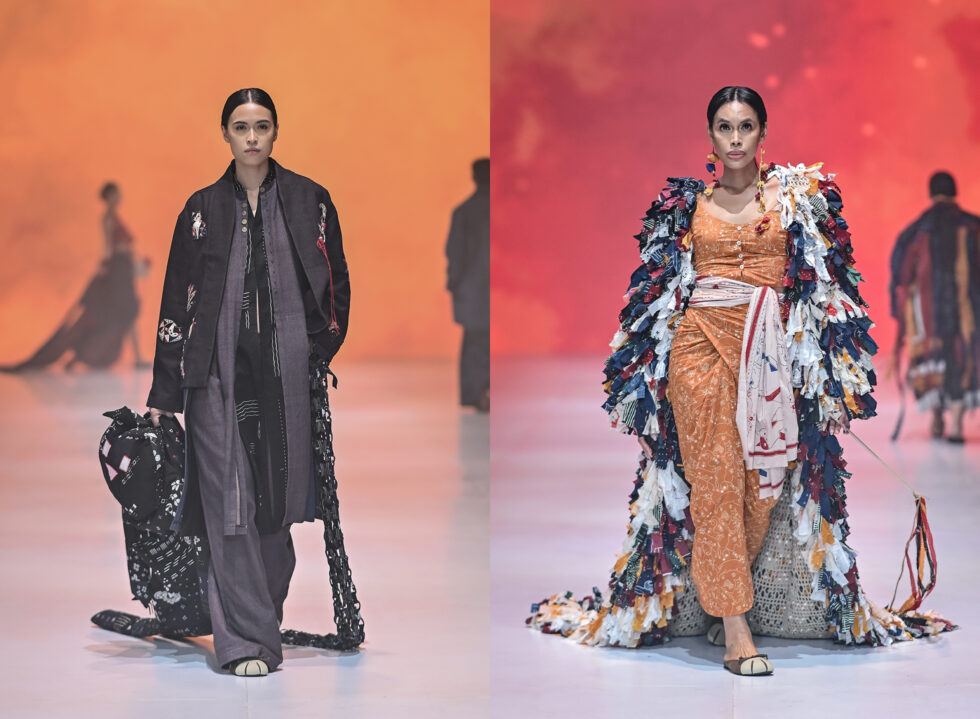
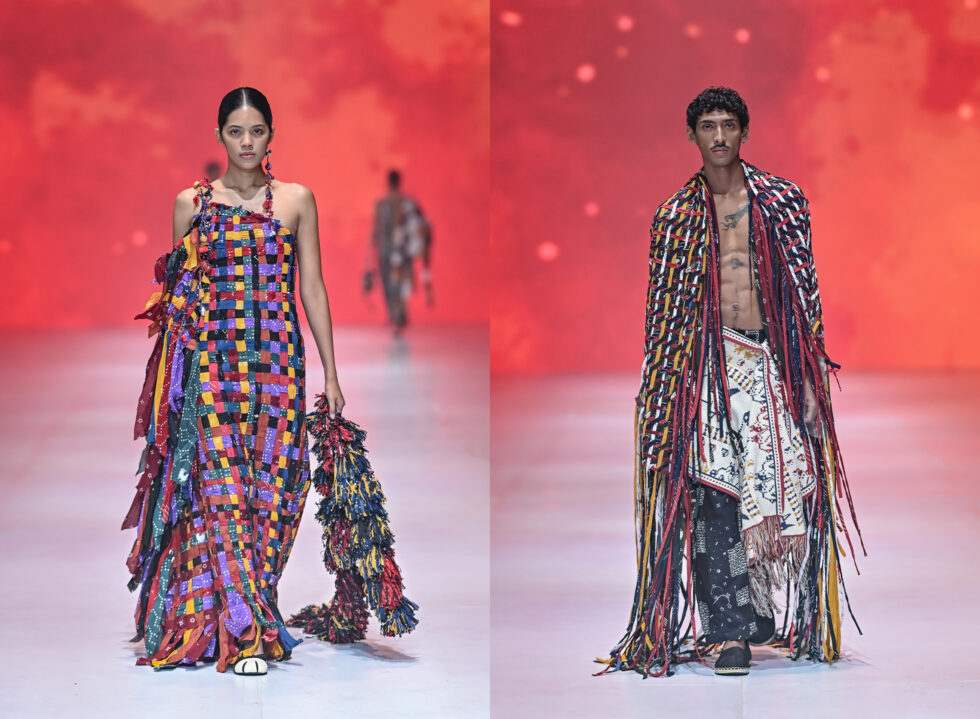
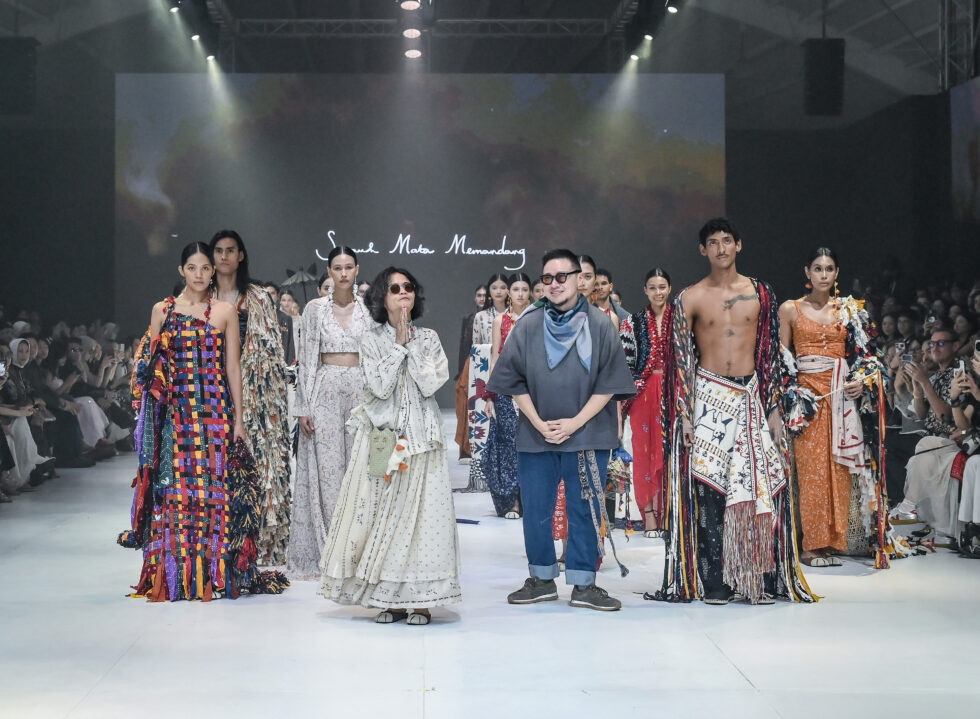
Sejauh Mata Memandang, on the other hand, approached it from a rather different angle. For RAUNG, Chitra Subyakto and co-creative director Felix Tjahjadi turned to the feline world, with cats taking centre stage. Given Chitra’s longstanding interest in bringing environmental and social concerns onto the runway, it was hard not to read the cats as little symbols of rebellion. They may be perfectly content to curl up beside you, but annoy them enough and they’ll hiss, scratch and make their displeasure known.
The show’s atmosphere offered another clue. The background screen shifted from pale yellow to deep orange and eventually a fiery red, recalling the forest fires that have ravaged parts of the country. Environmental issues are a familiar concern in Chitra’s work, but this time the message came wrapped in something considerably more playful.
Having cats in a collection is almost a cheat code. They are universal catnip, after all. Line drawings of them appeared across sarong skirts and indigo shirts; batik prints showed cats chasing mice in what looked like a game of Pac-Man. Giant cat plushies were carried as bags, perhaps serving as pillows when need be, while frayed trousers looked as though they had been designated as scratching posts. There were slippers and heels with little cat paws peeking out from beneath the hems as the models walked by.
The political message was still bubbling underneath, but the difference this time was that Chitra and Felix seemed more willing to trust their audience to make the connection without spelling everything out. One could look at the show and come away with a mental shopping list of pieces. Another might see it as an invitation to inject a little levity into dressing in troubled times. Or perhaps it offered a way to think about the frustrations that have been building beyond the runway.
No matter which reading one takes, and even if the audience did not arrive at the same conclusion, one no doubt left the show with something to hold on to.