

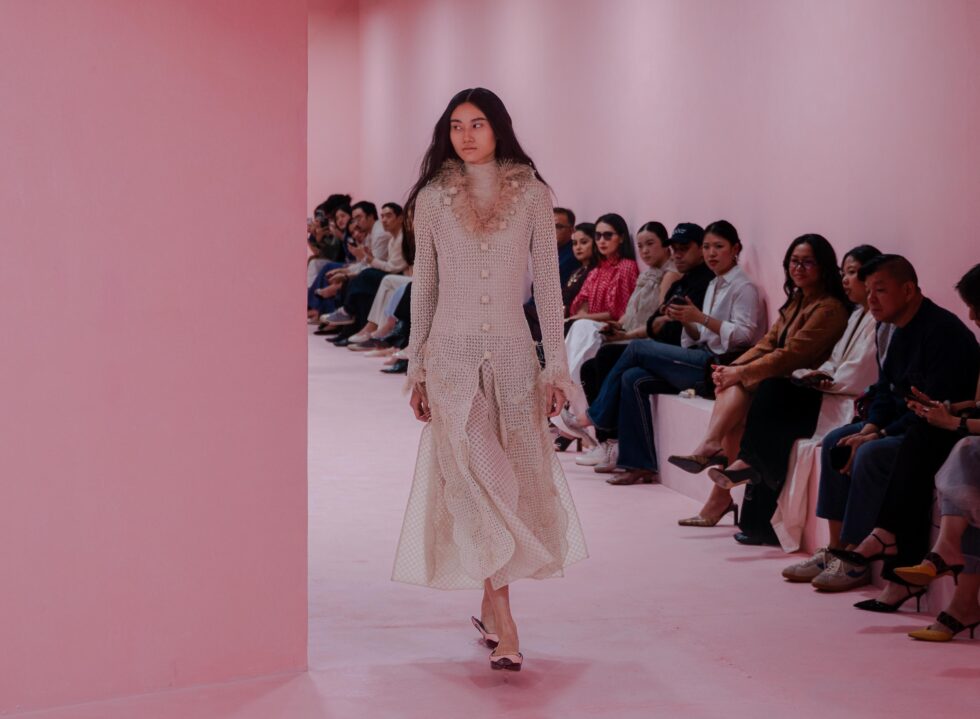



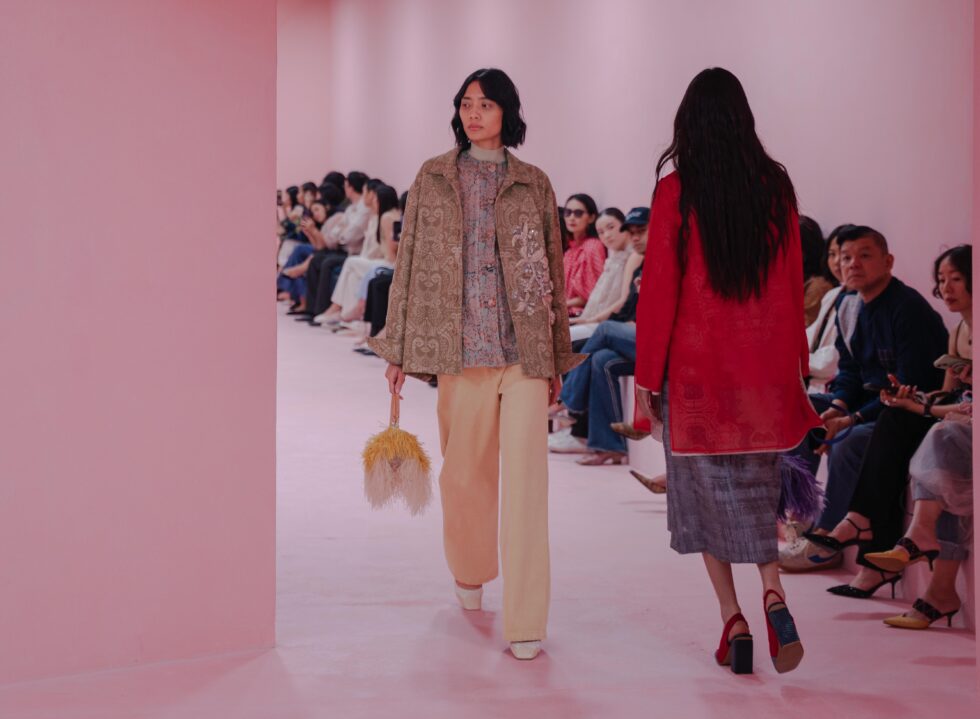
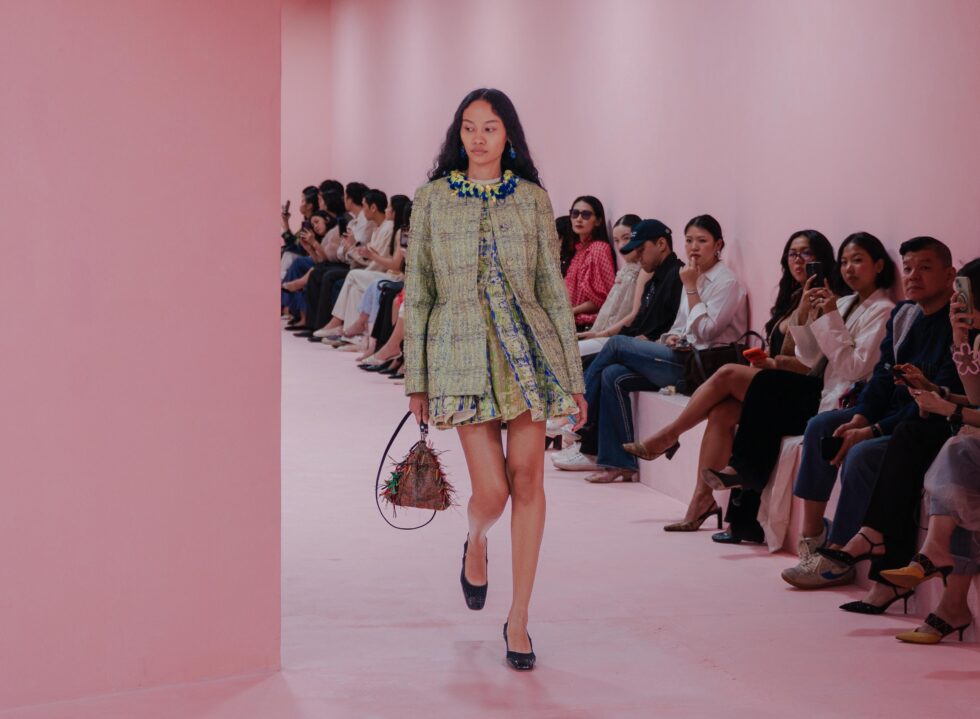


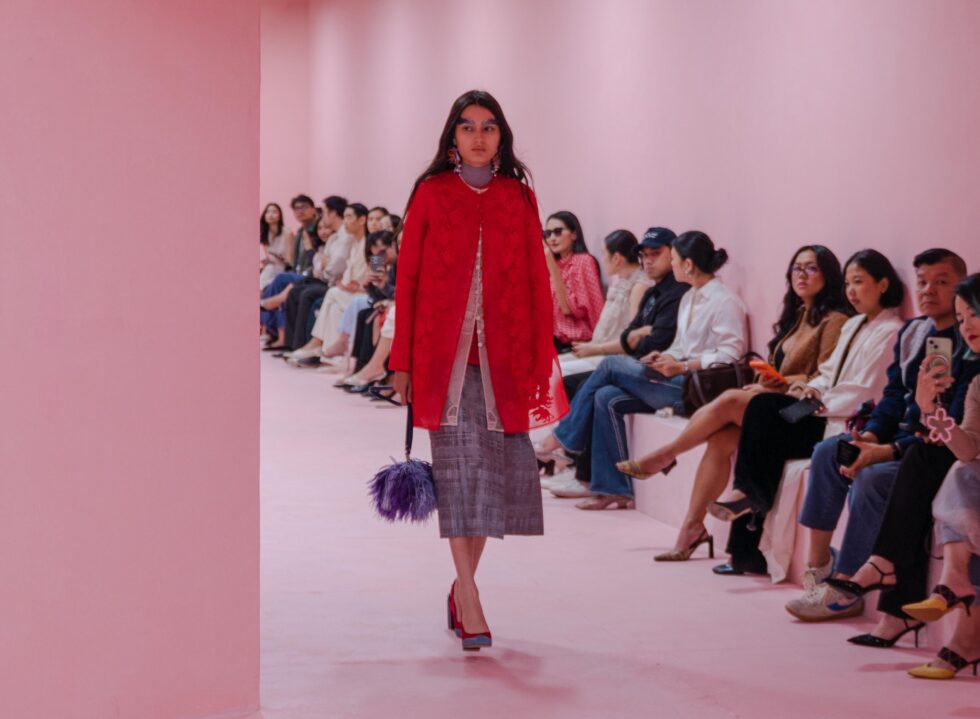


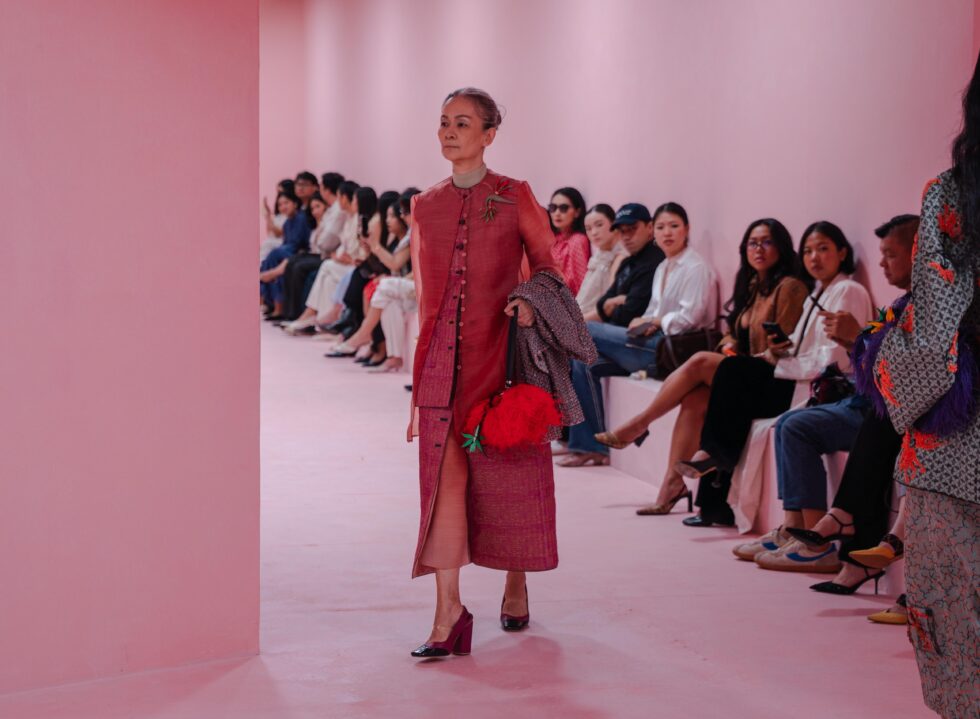



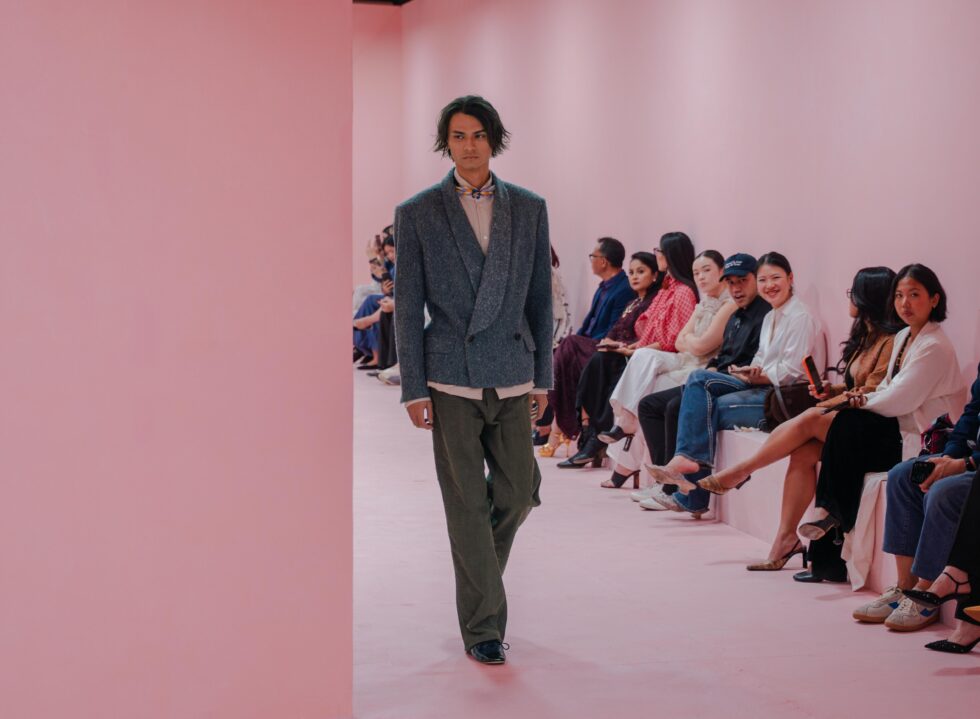

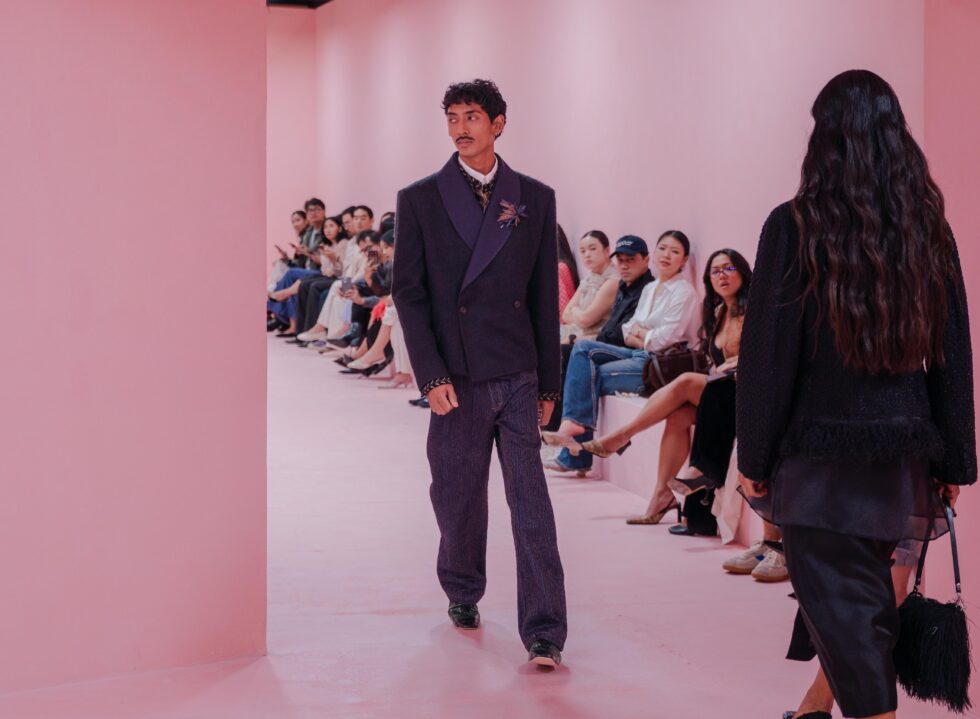

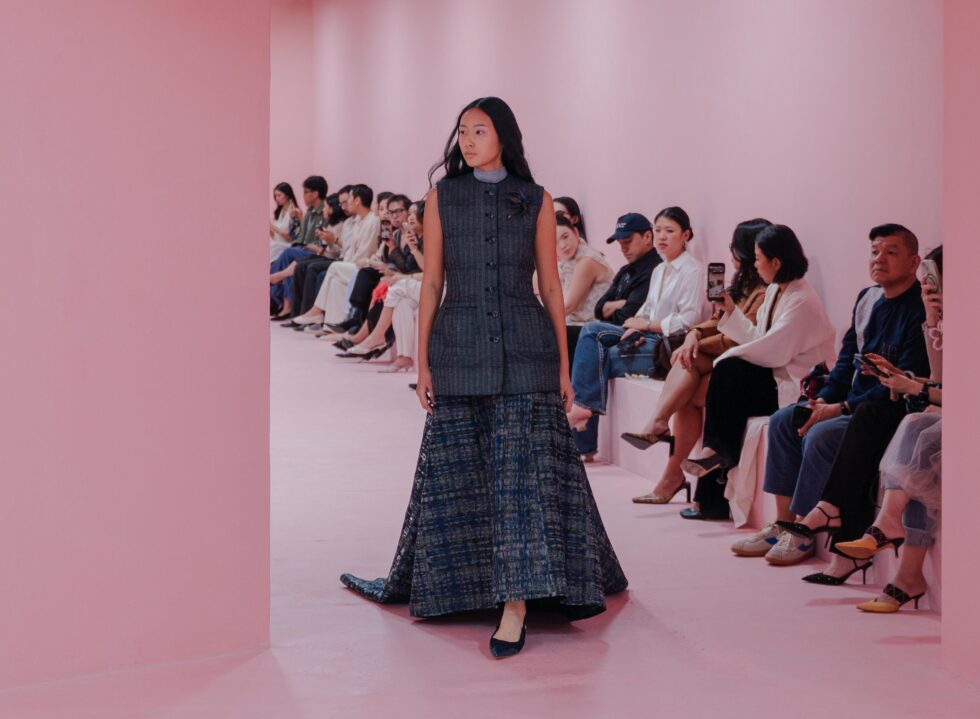
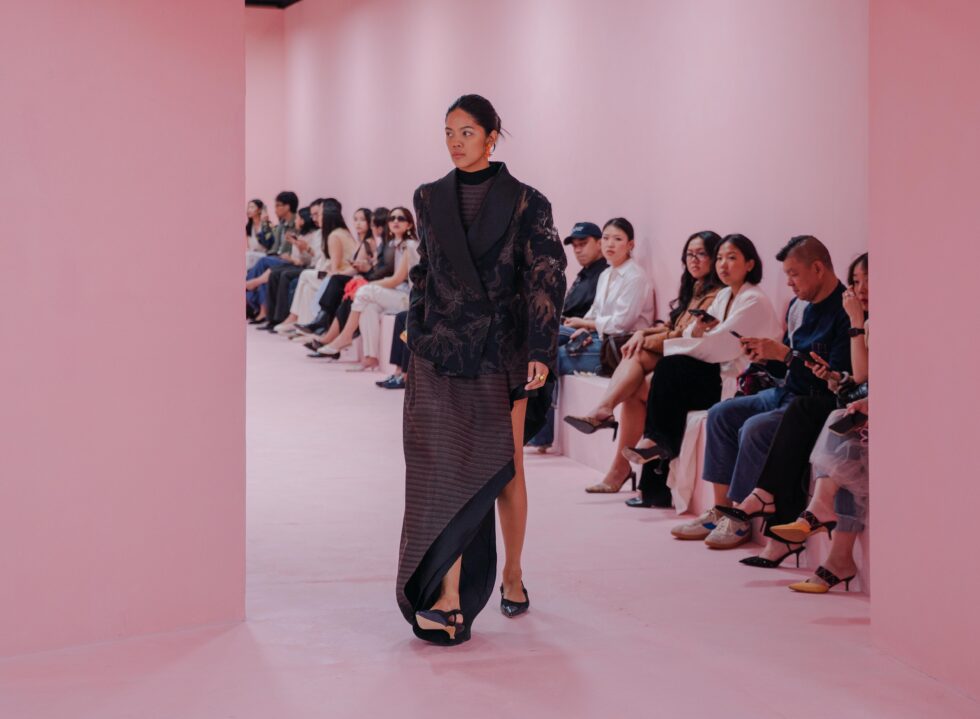


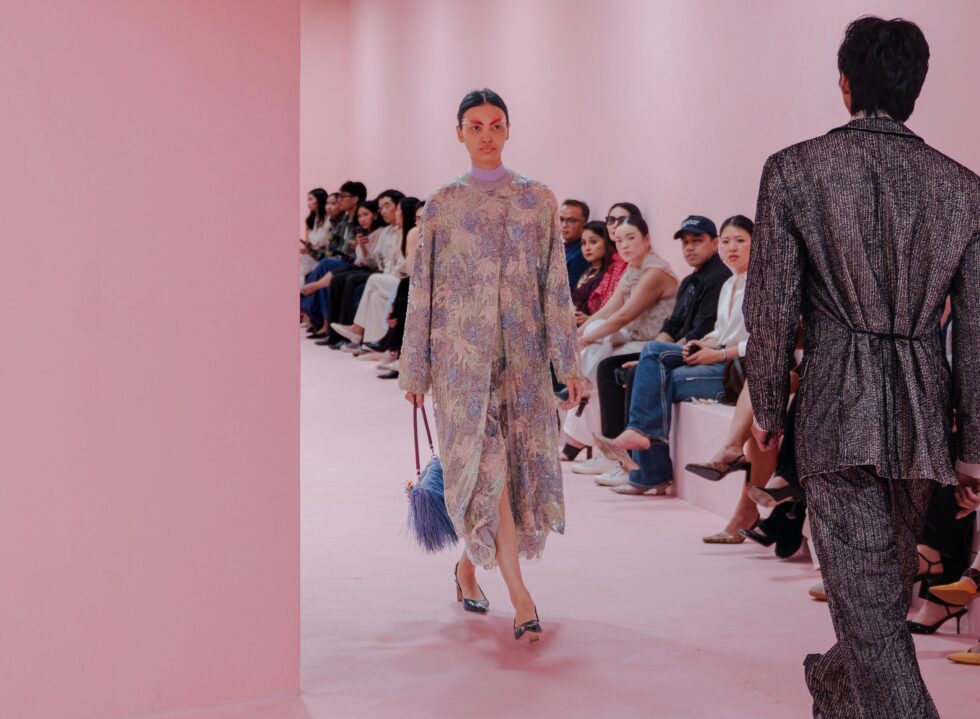


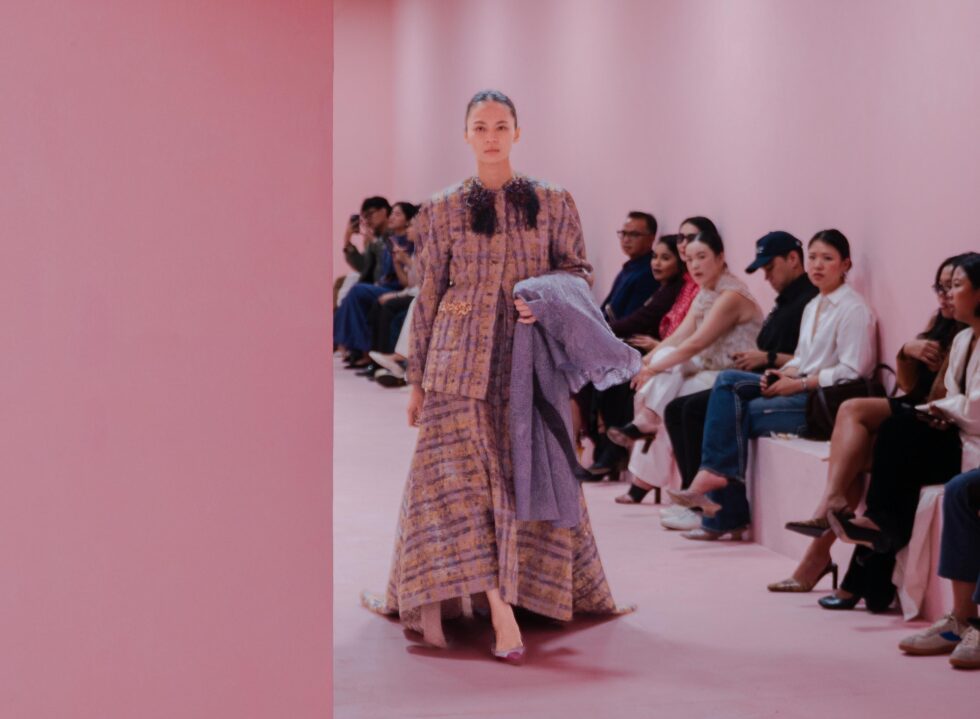
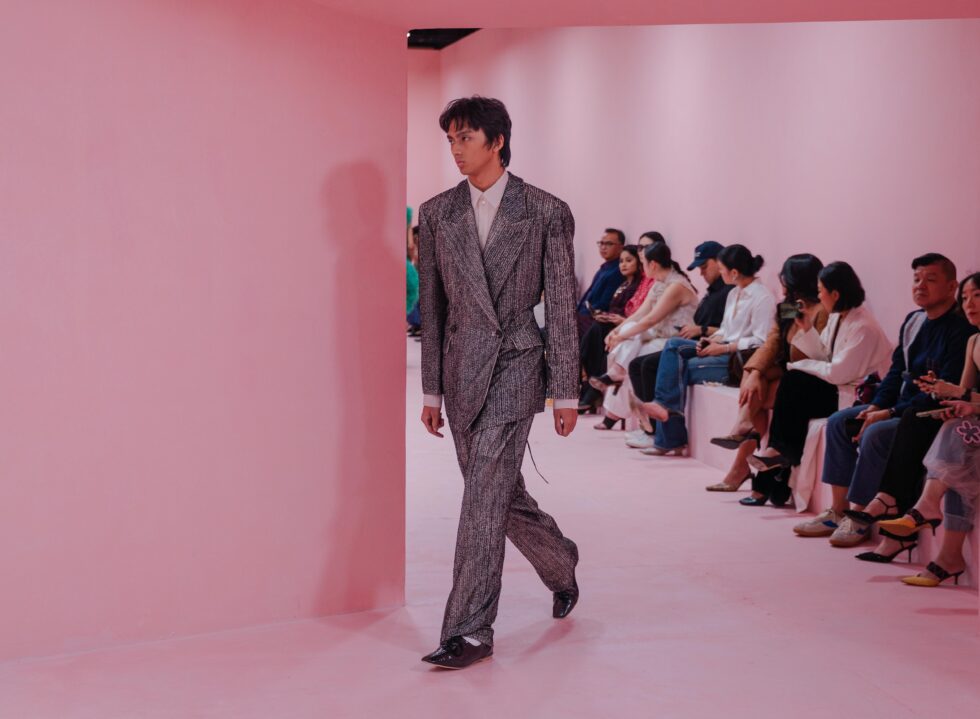


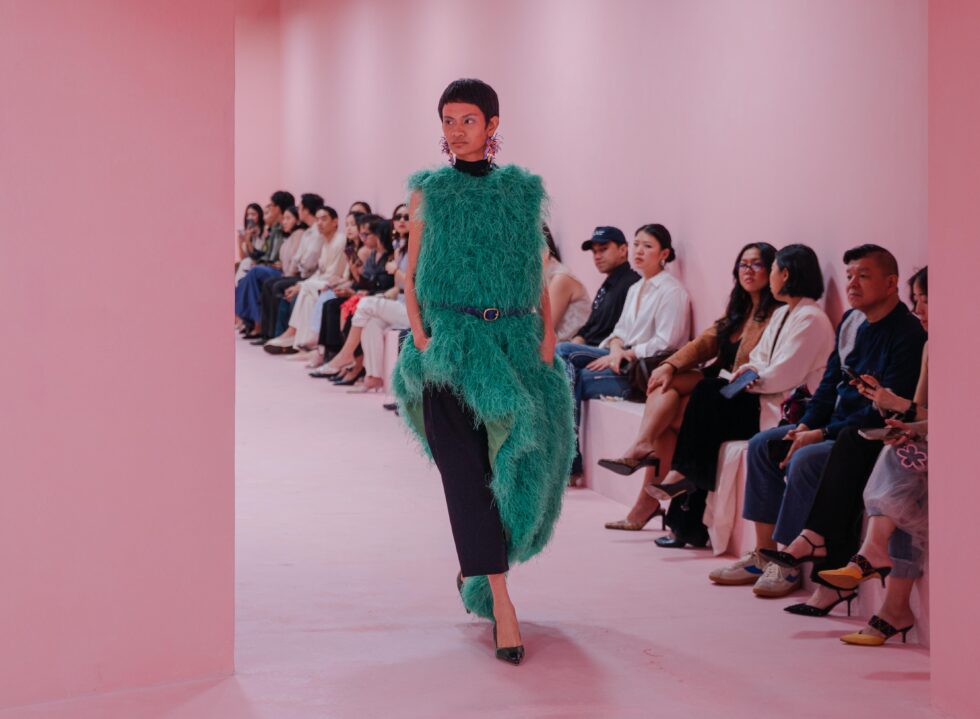

There was plenty to look at in Sapto Djojokartiko’s latest collection. Even before the show began at The Penthouse of Sentral Senayan Tower, guests — celebrities, editors and stylists, some dressed in Sapto’s creations — offered a visual amuse-bouche as they snaked through the terracotta-pink maze designed by GondoJules Studio.
The collection was a tactile parade. Textures piled upon textures, with details that rewarded a closer look. An embroidered jacket featured loose threads, hand-stitched a few inches above the hem to evoke the texture of feathers. On a striking blazer, laser-cut organdy strips were painstakingly pinned to form blooms of crimson flowers, resembling delicate strokes from an expressionist painting. Yet, for all the intricacy and the command of techniques, the collection can’t seem to settle on what it wants to be.
The strongest pieces were those grounded in reality. A light skirt suit worn beneath a sheer jacket, for instance, carried the elegance of a kebaya and the urgency of workwear. One could imagine a modern Peranakan woman in these clothes, someone who might discuss business and exchange recipes in the same conversation. There was a lived-in quality to the idea, a sense of a woman with a life beyond the clothes she wears. It was in these moments that Sapto’s proposition for how we might dress today was compelling.
Still, the collection seemed caught between two competing instincts. Was Sapto proposing a wardrobe of considered pieces, where a handful of well-made clothes could carry a woman through different occasions? Or was he more interested in volume, drama and the spectacle of dressing up? The distinction matters. The collection oscillated between restraint and excess without quite finding a way to reconcile the two.
There was another, more difficult question hanging over the collection. In several looks, the references to established European luxury houses felt difficult to ignore. It was not simply a matter of fabric, but how the textured surfaces, intricate embellishments and boxy, collarless cuts came together, bringing Matthieu Blazy’s Chanel to mind. References are hardly unusual in fashion, but when these similarities become so pronounced, they risk reducing the clothes to a proposition of “if you cannot afford the original, here is an alternative.”
Sapto has shown before that he is capable of something more convincing. Last year’s show, with its imaginative edit of pieces balancing contemporary forms and traditional heritage techniques, offered a clearer sense of what his brand could stand for. There was room for the craftsmanship to speak, while the clothes themselves felt purposeful.
Sapto has demonstrated an expanded capacity for execution, along with the ambition to match it. The question is what he chooses to do with both. His atelier can produce clothes of extraordinary intricacy, but craftsmanship alone cannot give a collection its point of view. A craft house knows how to make something beautifully. A fashion house must know what it wants to say.