




Throughout his practice, Olafur Eliasson has moved fluidly across disciplines — photography, art, science, ecology — weaving light, space, and natural phenomena into a meditation on perception. The Icelandic-Danish artist views seeing not as a fixed sense, but as a set of tools through which we orient ourselves, endlessly negotiating the world around us.
The works that emerge from these explorations are expansive and ambitious: from creating an ‘indoor sun’ using monofrequency lamps, temporarily colouring entire rivers green, to staging glacial ice blocks in public squares to pull distant ecological realities into immediate view. Across these works runs a continuous inquiry into how seeing happens, and how easily it can be nudged, unsettled, or reframed by the conditions around it.
“For me, a work is never truly finished until it encounters the viewer, until those looking at the work co-produce it through moving around the work, exploring it, and activating it.”
In ‘Your curious journey’ at Museum MACAN, Olafur’s first exhibition in Indonesia, he extends this investigation to the visitor. From the start, the show discourages passive observation, coming alive only through engagement. How visitors move, where they look, and what they choose to interact with shapes the work itself; each encounter is filtered through individual perspectives and experiences, making it deeply personal. “For me, a work is never truly finished until it encounters the viewer, until those looking at the work co-produce it through moving around the work, exploring it, and activating it. This is why I have often made works that incorporate the viewers’ shadows or reflections,” Olafur shared.
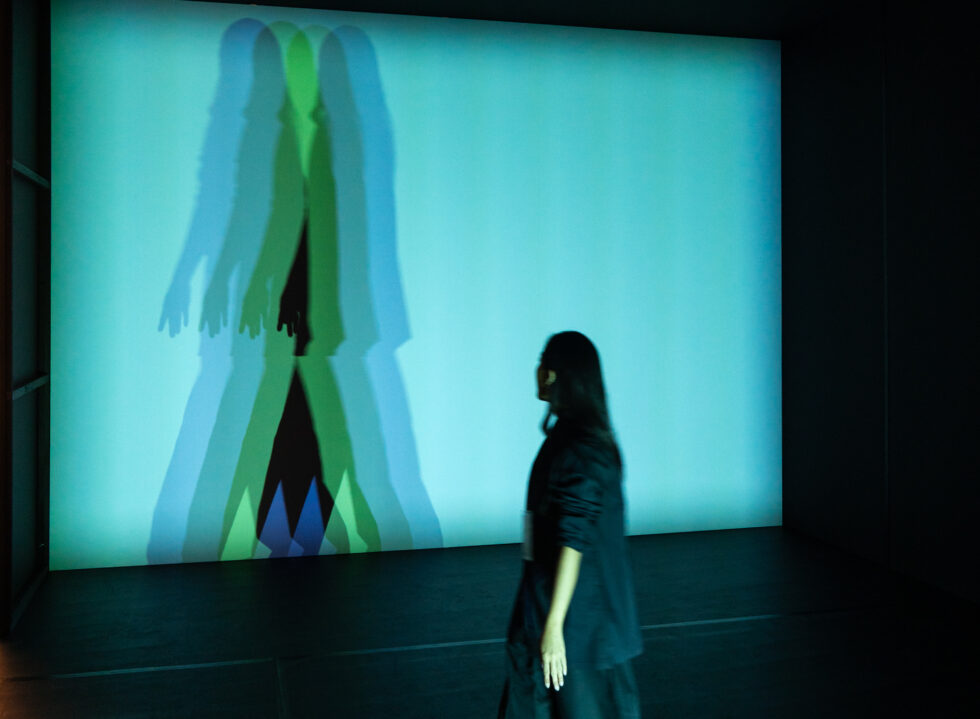
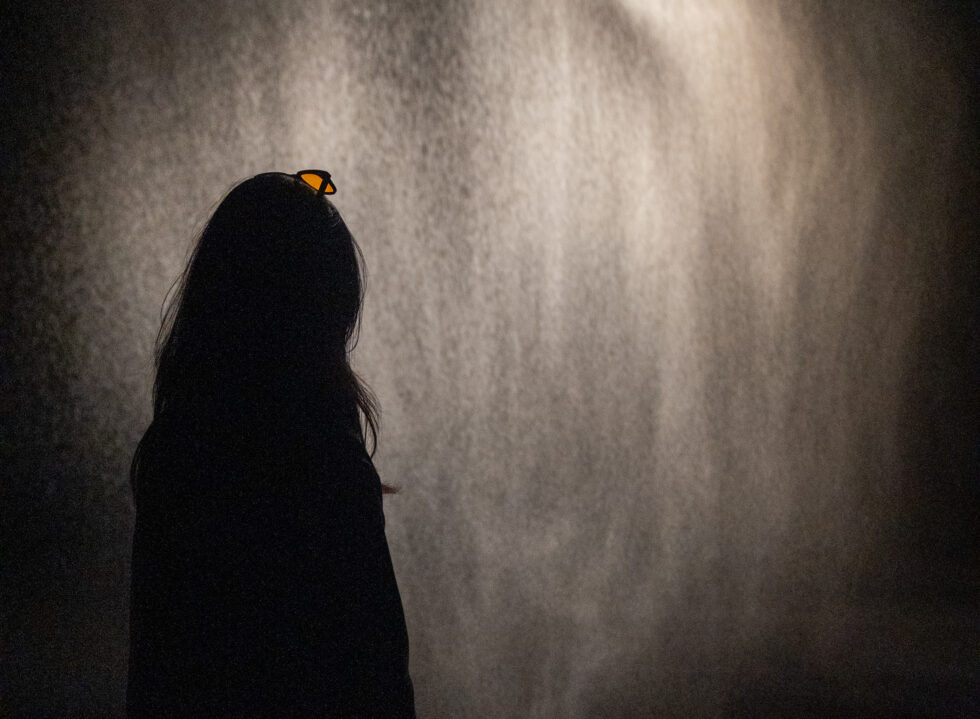
In ‘Multiple shadow house’ (2010), the installation remains dormant until a visitor moves through the streams of light. Silhouettes stretch and layer across the walls as visitors playfully experiment with movement and distance to activate unexpected patterns. One of his most iconic works, ‘Beauty’ (1993), directs a single beam of light through a curtain of fine mist; from different angles and heights, a delicate rainbow materialises uniquely for each viewer.
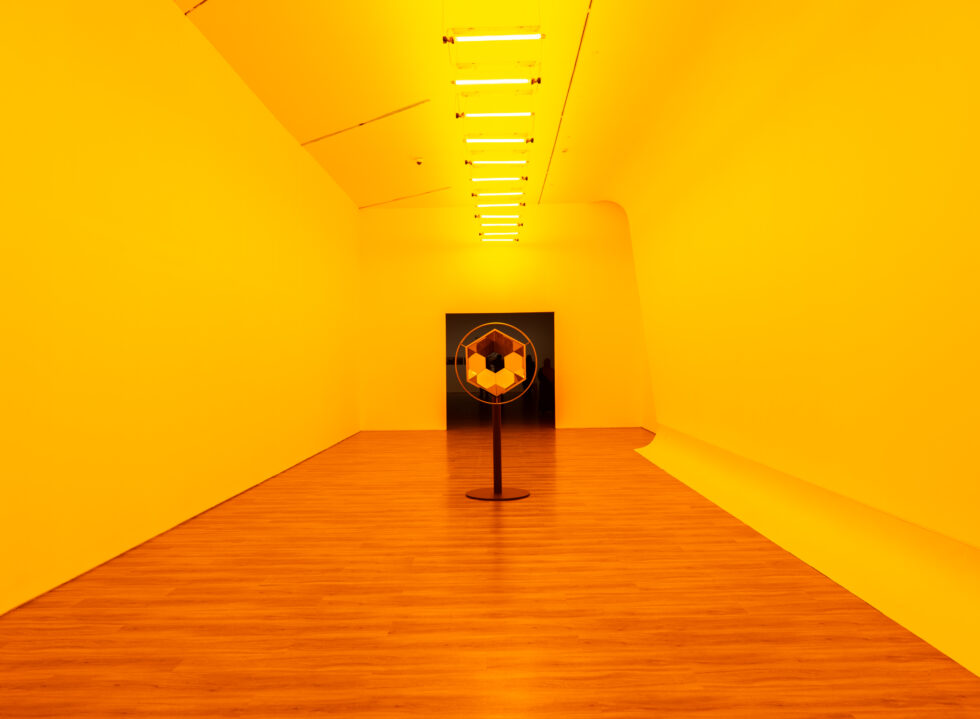
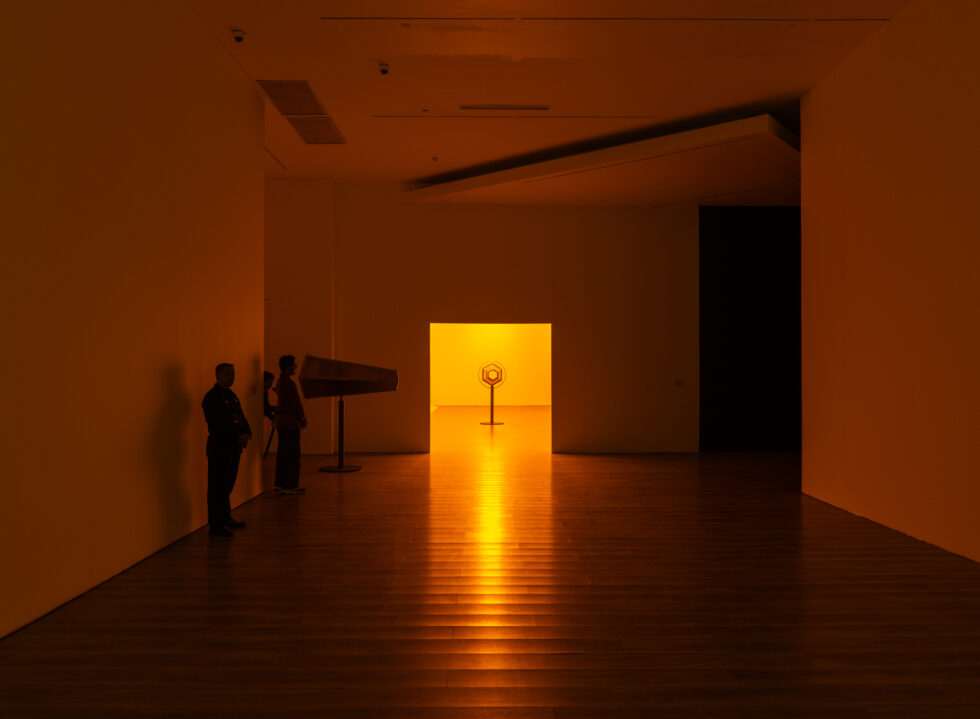
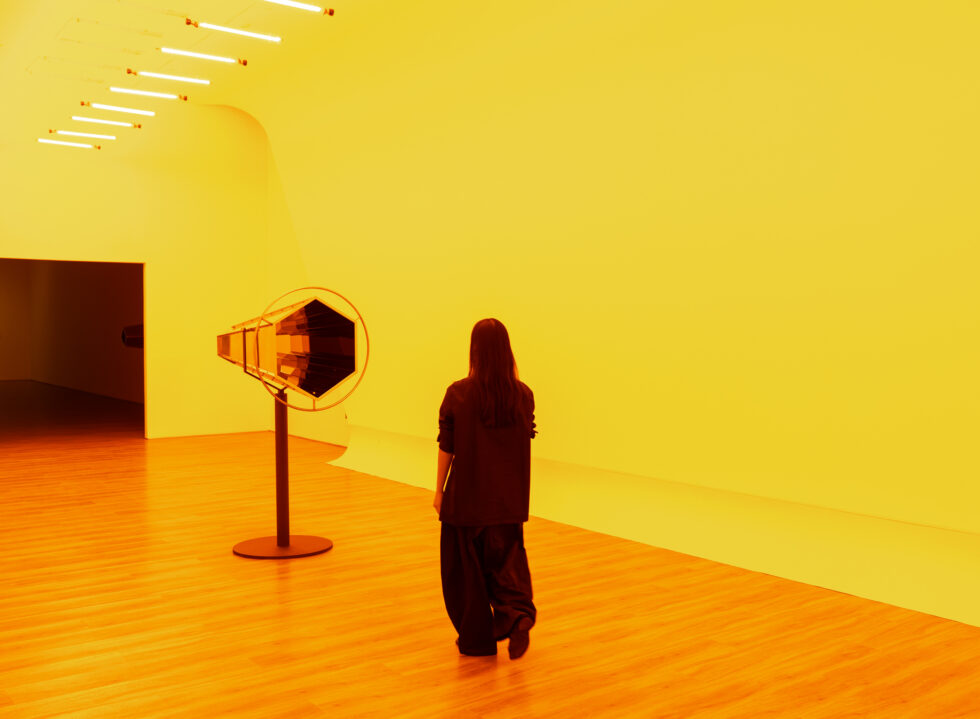
‘The yellow room’ (1997) bathes the space in a monochromatic yellow haze, a colour filter that absorbs the spectrum, reducing the visible world to black, grey, and yellow, unsettling the eye’s certainties. “When I talk about making the intangible, or invisible, tangible, it is often a question of the very conditions of visibility itself. Our perception of a thing has a lot to do with what we know about it and its context,” he explained.
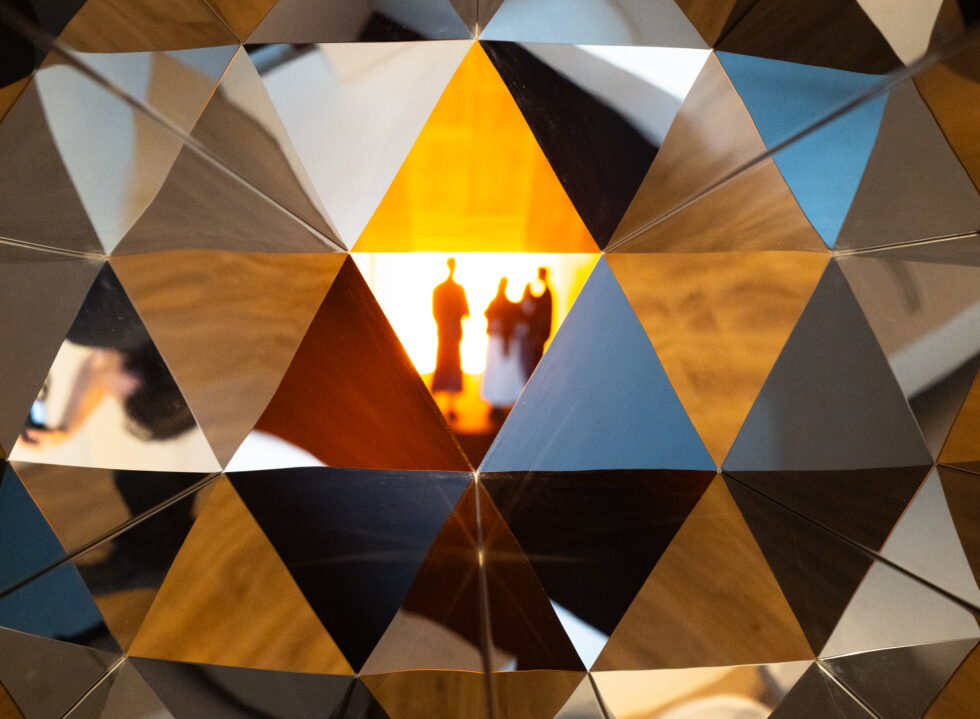
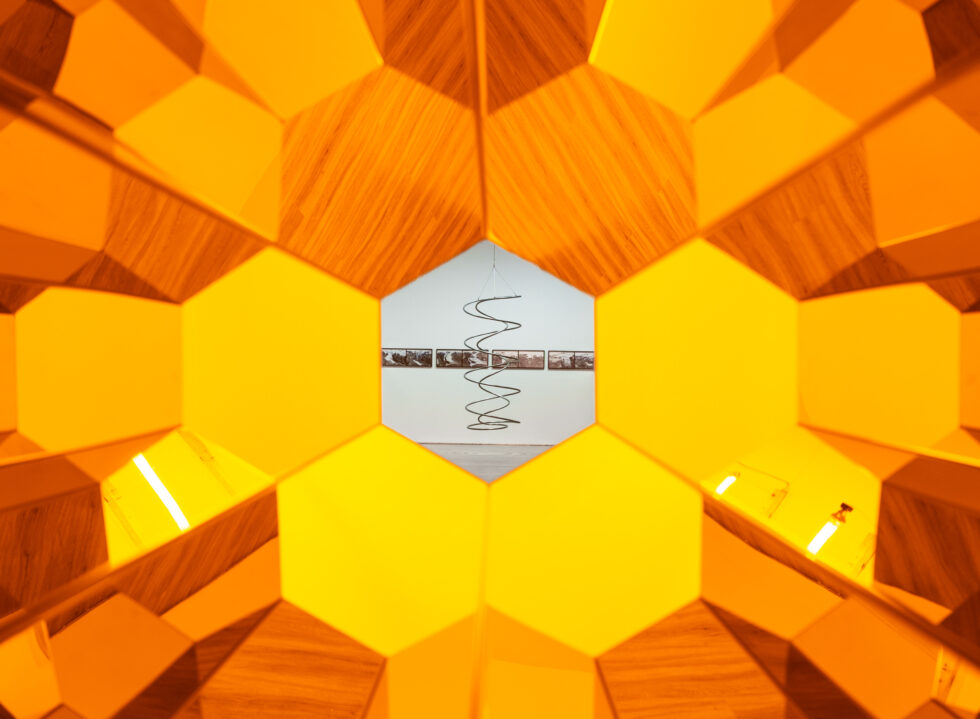
Scattered throughout the exhibition are four large kaleidoscopes made of stainless steel with mirrored interiors, titled ‘Multiverses and futures’ (2017). Visitors are invited to tilt and rotate them, catching fragments of the surroundings that splinter into shifting geometric patterns. Each device features its own viewing aperture and produces distinct constellations of reflections that exist only through interaction, further highlighting the ephemeral, co-constructed nature of perception.
“In the best cases, these out-of-the-ordinary experiences should be an invitation to reflect on your bodies and your role in making the world you live in.”
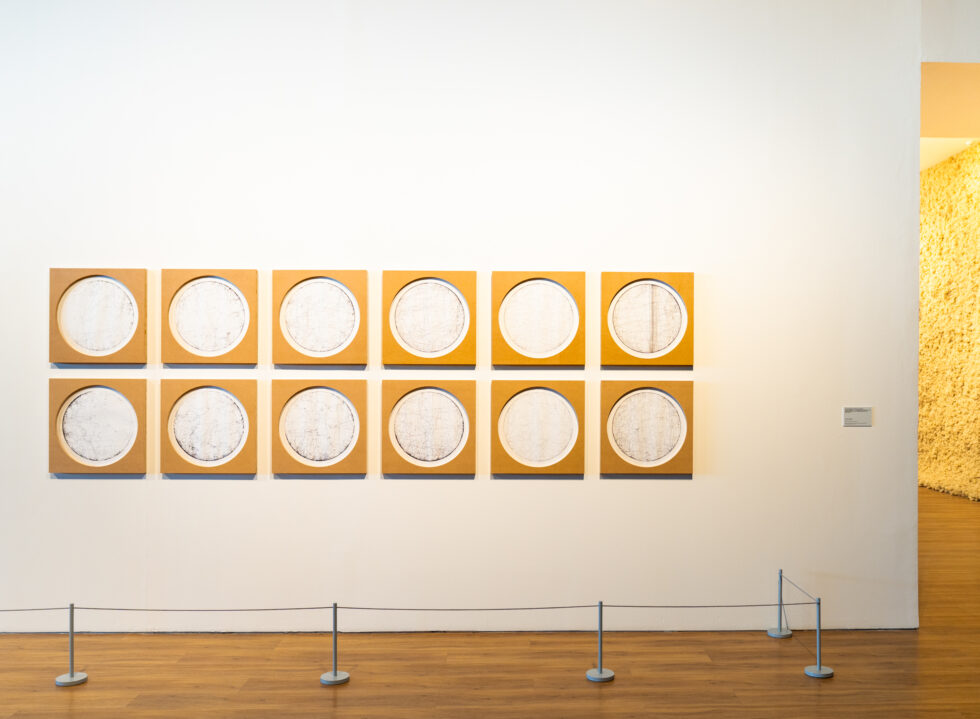
The exhibition also reveals a more personal side of Eliasson’s practice. Works like the ‘Glacier melt series’ (1999/2019) document the retreat of glaciers of his native Iceland, photographed from the same vantage points two decades apart, offering a striking reflection on both environmental change and the passage of time. Newer work such as ‘The seismographic testimony of distance’ (2025) is similarly intimate. As the exhibition travels across oceans and land, mechanical devices attached to the crates record every jolt, tilt, and sway, producing abstract marks that animate the works long before they arrive at their destination museums.
“These machines are direct descendants of experiments I made with my father many years ago,” Eliasson explained. “He was a cook on a fishing boat as well as an artist, and we came up with the idea of using the motion of the boat to create drawings by hanging pens from strings. The resulting drawings recorded the waves and the motion of the ship. They were a kind of collaboration with chance.”
As with much of Olafur’s work, there is no single fixed viewpoint. Seeing, for him, is an active, curious, and participatory act shaped by our own personal experiences. In ‘Your curious journey’, the museum becomes a laboratory of perception, where visitors learn to notice subtleties, question assumptions, and move through the world with renewed awareness, a perspective he hopes would extend well outside the museum halls.
“The majority of works in ‘Your curious journey’ are about presence. They are created with space in mind. The physical embodied encounter between viewer and art is central to their effectiveness,” shared Olafur. “In the best cases, these out-of-the-ordinary experiences should be an invitation to reflect on your bodies and your role in making the world you live in.”
Olafur Eliasson’s ‘Your curious journey’ runs from 29 November 2025 to 12 April 2026 at Museum MACAN. For more details and booking information, click here.